The Australian parts order eventually arrives! (Part 2)

So, we left off at the point where the following parts had all been replaced/refurbished at the same time:

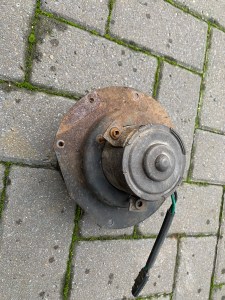
Heater fan and box
Starter Motor
Alternator
Radiator
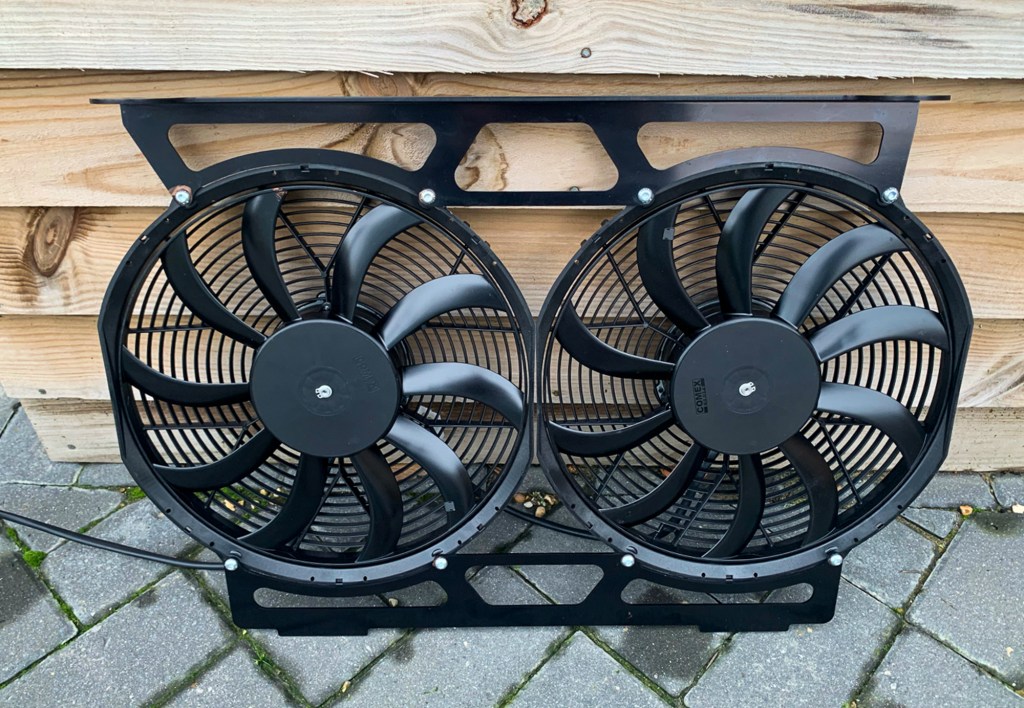
Cooling changed to Electric Fan from viscous coupling
Thermostat
Water Pump
and all of the nuts, bolts hoses, gaskets etc etc.


So it fired up OK and I could see no leaks………which was good. As stated in the previous post it was getting late, and it was not getting up to a temperature sufficient to start the fan.

So the next day we go out for a drive, not venturing too far from home. Eventually the water temperature gauge gets to normal; after staying static for ages, it made a sudden sprint for the middle part of the gauge – which was also a new part.

I could not hear the fan kick in, but the windows were open and there was no floor as I was still working on the interior, so it was somewhat noisy! I headed back to home to have a listen and to top up the coolant if required. Expecting a quick pit stop at home, I just pulled onto to front of the drive, not all of the way to my usual spot. The fan was running which was good, so I waited for it to stop and checked the coolant level which was also OK.

I thought then I would go for another longer drive………..but it would not start. The starter was operating, sounding like a machine gun, but was not engaging to turn the engine over. Luckily my friend Darren was passing by and he dropped in to do some trouble shooting.

We did all the usual checks, the hammer whilst cranking (not sure why this would work as it was a new starter), relays (these were all new), and checking that current was getting to the starter.

What, no current to the starter with all new wiring? The battery isolator had failed. Once bypassed it still did not start – a red herring, but something thats needs to be dealt with (See another post)

We did notice that the earth between the block and the chassis was getting hot, very hot in fact and smoking…………This is ironic as it was the only piece of wiring that I did not replace. I did take it off and clean it up, but because it seemed to be copper I took the executive decision to leave it on. That will teach me.

We decided that the earth was probably the problem, so the next day I made up a replacement – no smoke , but no start either. The Perentie was blocking access to the drive, by chance I had moved Benita’s car onto the road in order to get the Perentie out of the drive; which was lucky for me!

I had to get it moved, so I re-fitted the old starter and – it fired up on the button

Oh, what to do – could it be the new starter; which I had had on the shelf for over a year – out of warranty………..

Anyway I called up the supplier, the Alternator and Starter Motor company, who were extremely helpful. They walked me thought a few tests during which it “machine gunned” again and they agreed to send me out a replacement.

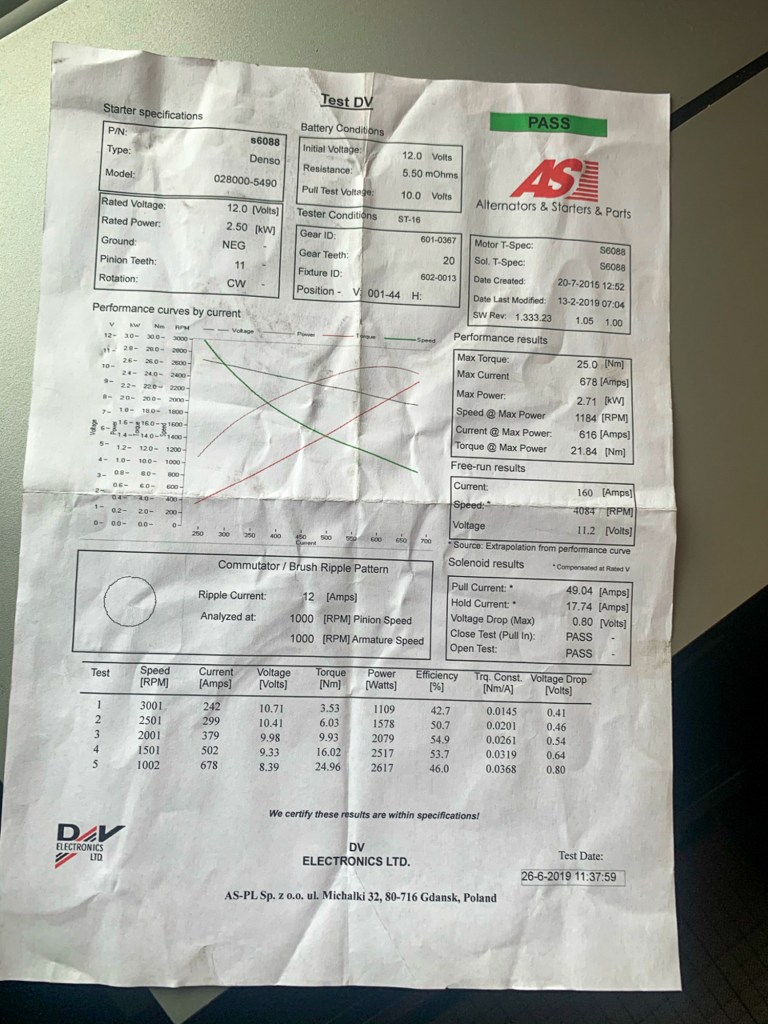
Once the replacement was fitted……………same problem, no start, which made me sad!……..I hasten to add that it was easy to fit the Starter when everything was stripped off of the engine whilst doing the other work, not so simple now. It is heavy and awkward to manoeuvre into place, especially when you are on your back in the cold.

Now these starter motors are not the easiest to find and I found the part number by trawling a few forums, as I could see no part number on the original whilst it was on the vehicle. So in desperation I started to hack the gunge and paint off of the original, eventually I came across as sticker which was almost illegible, but I could make out a telephone number. A quick google brought up a supplier of Starter Motors in Birmingham……………..Nippon Distribution – makes sense for an Isuzu part.
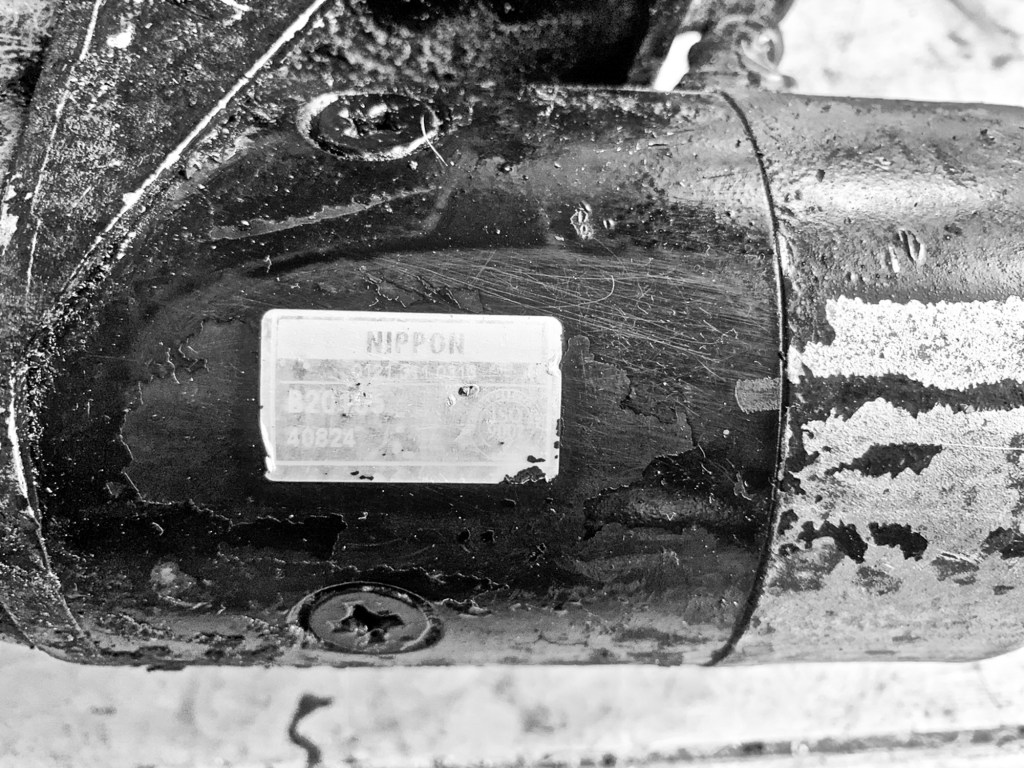
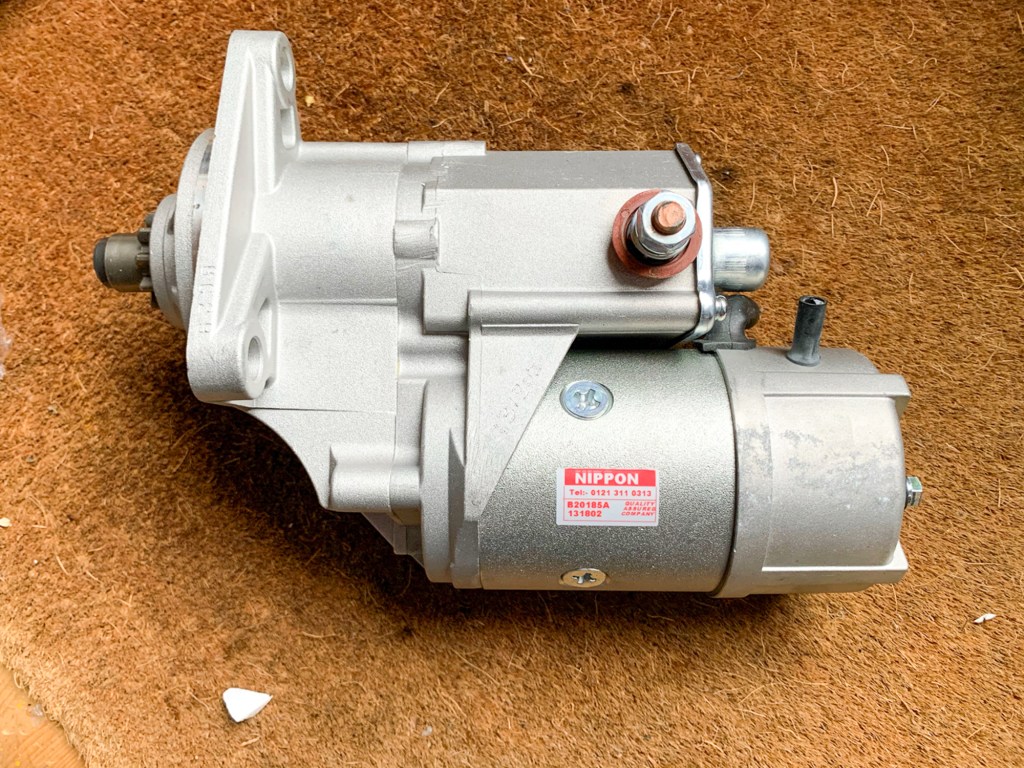
A quick phone call and a new unit was on the way to me. My original unit was suppled by these guys many years ago, the serial number which I could just read on the sticker was some 18,000 units behind where they are now, so an old unit.

Anyway, the new unit was fitted (getting good at that now) and the Perentie started – no problem. No idea what the issue was with the other starters – they were not original parts, which are impossible to get, but made in Poland. The Starter motor and Alternator Company took the replacement unit back and refunded me – so a credit to them.
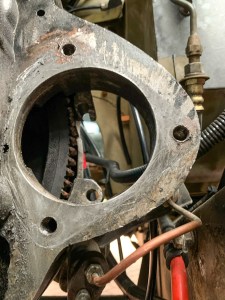
i did notice during all of this that the Bell Housing (which was not the original) was open at the rear, exposing the Starter to the elements. A job for the future is to make up a plate to protect it.

So on with replacing the Brake and Master Cylinders……..

The Australian parts order eventually arrives! (Part 1)

As I have said before on the blog, most parts from the engine towards the rear of the vehicle are Land Rover, but engine based parts are either Isuzu or available from Land Rover Australia only. A search for these takes you to either Landybitz or KLR in Australia.

My friend and Perentie “partner in crime” Darren was having a box shipped from KLR Australia, in which there was some room……….

So, I ordered up a Water Pump, Thermostat and gaskets, and a few other bits that I may need in the future. There was still room in the box, so I added a rear disc brake conversion kit for the rear axle – more of that in another post.

From inception to arrival this took months, mainly down to KLR being useless administratively. Once the box was shipped, it arrived in just a few days.

So now it was time to tackle the job that I had been planning for nearly year!

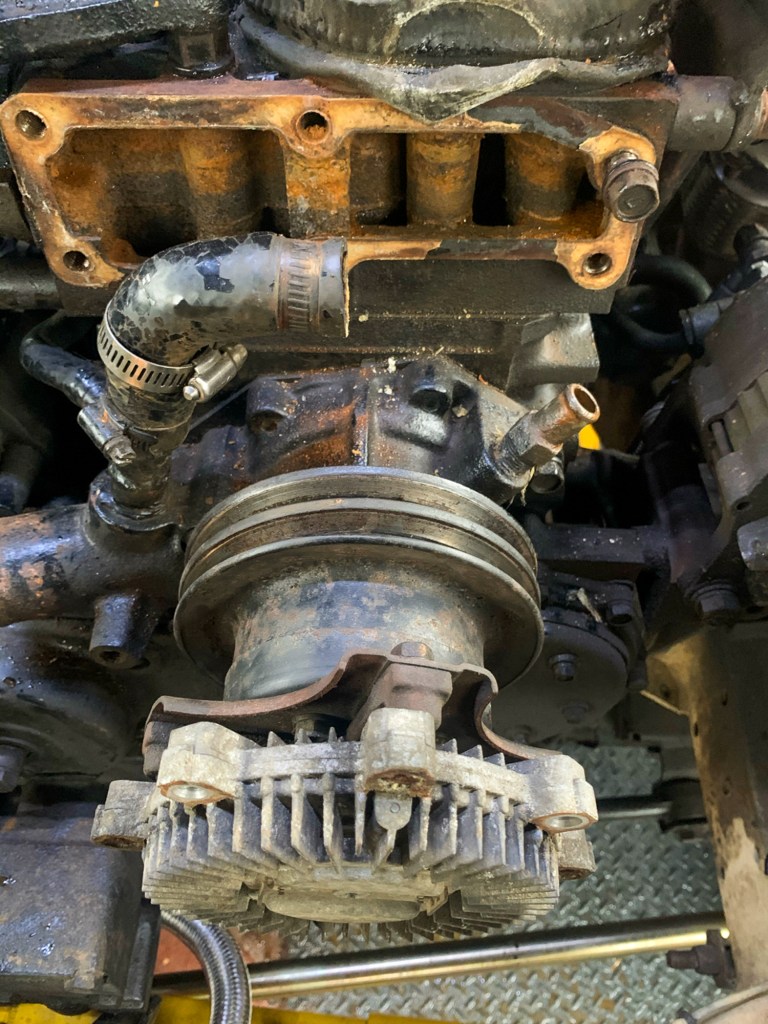
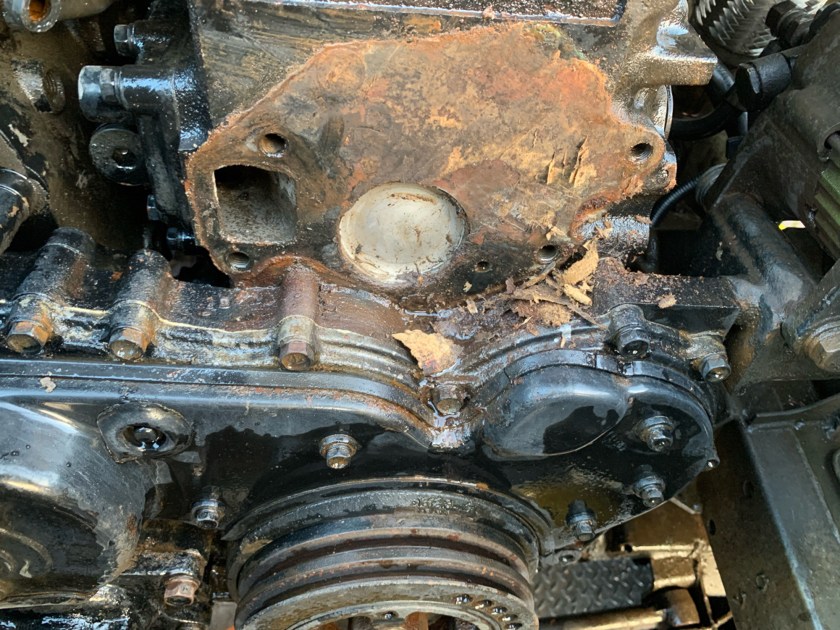
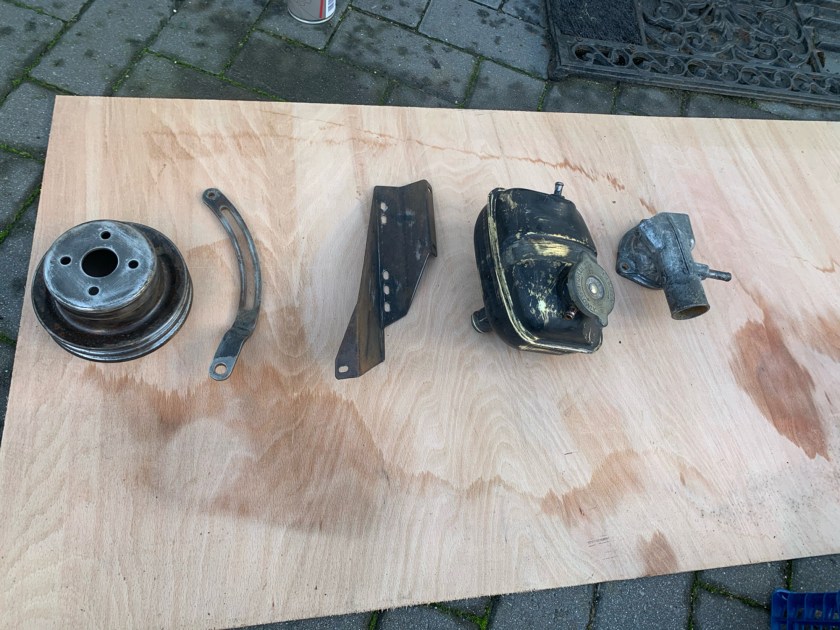
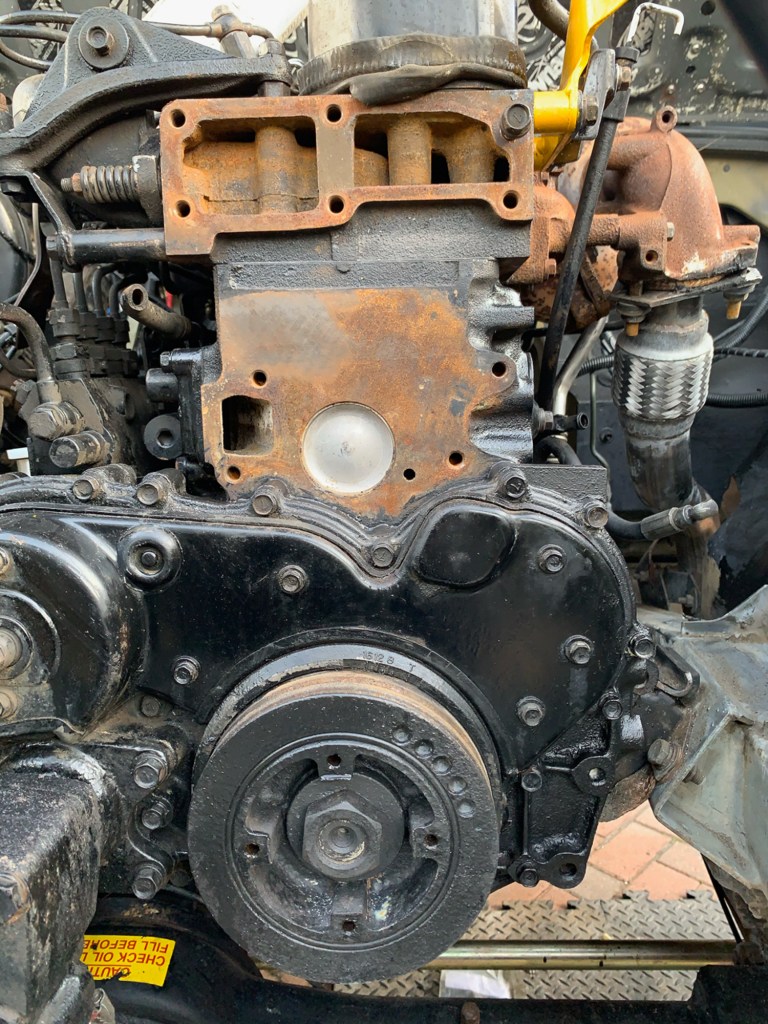
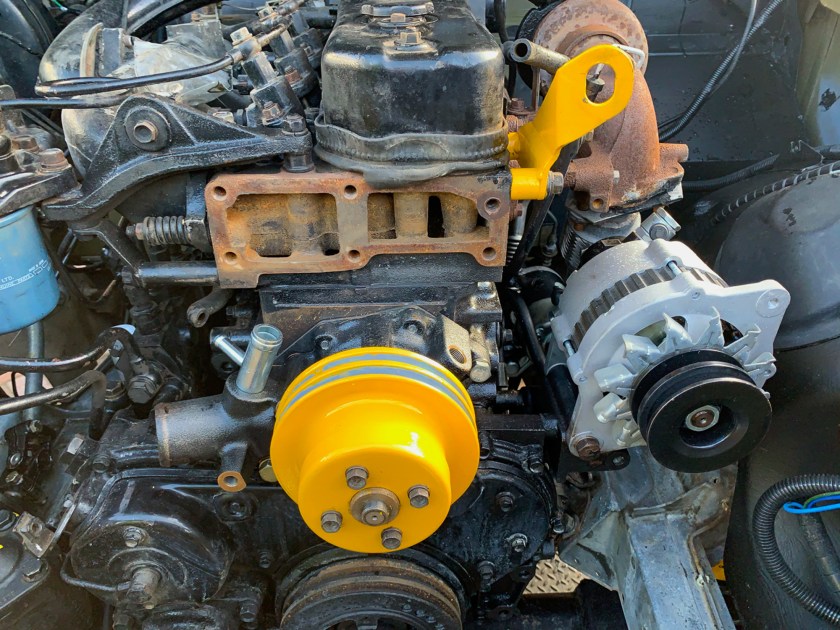
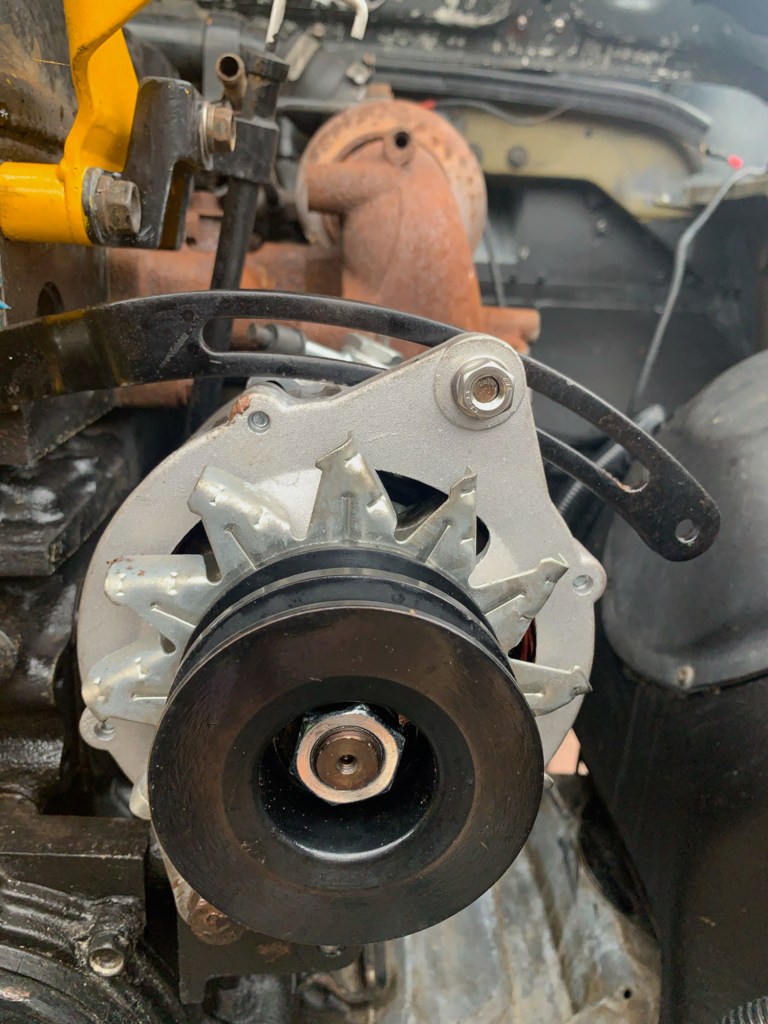
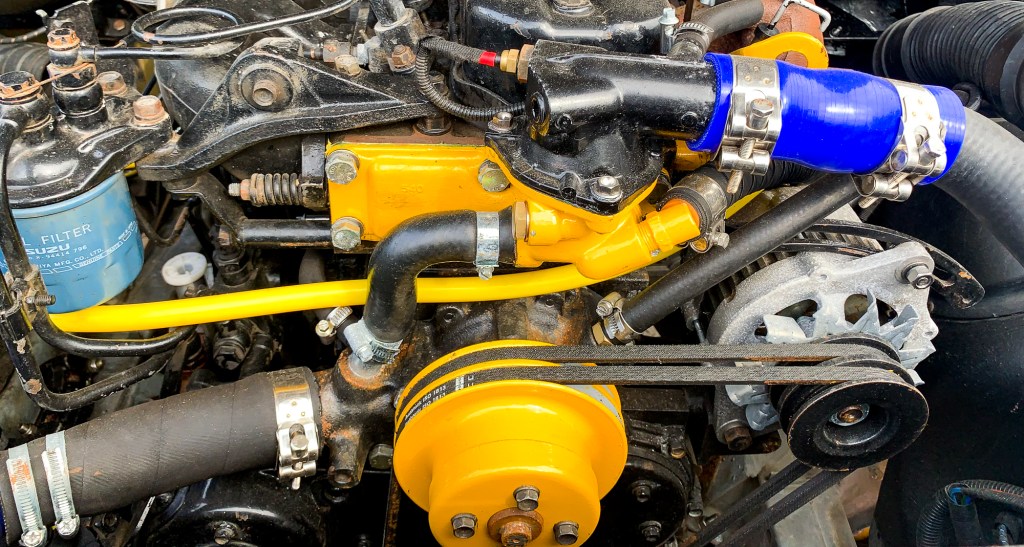
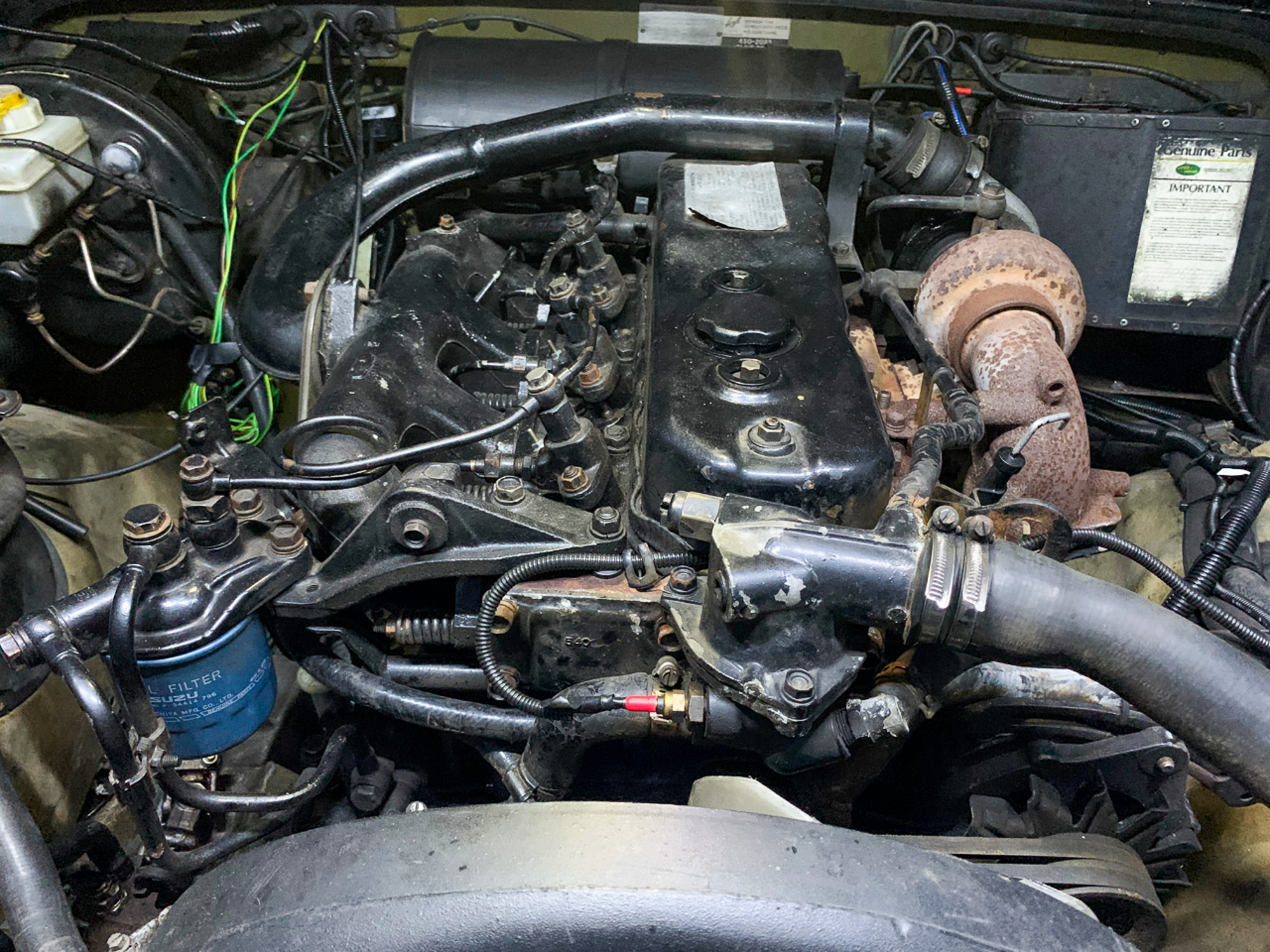
I removed the bull bar and the front panel in front of the radiator for improved access and then the radiator, viscous coupling, water pump, thermostat and the housings for the thermostat and water pump. With everything stripped back, I also removed the alternator and starter motor, replacements for which I already had. All of the water pipes came off as well as they were all past their best.

The heater box came out as well as it was in a very sorry and rusty state.

So long story short, all of the old parts and the heater box casing were stripped back and repainted. A new matrix was purchased for the heater along with bulkhead seals. I am not sure that this will make much difference as the heater on the Land Rover is archaic to be polite! But a least it reduce the possibility of a future leak as access to it is a pain…

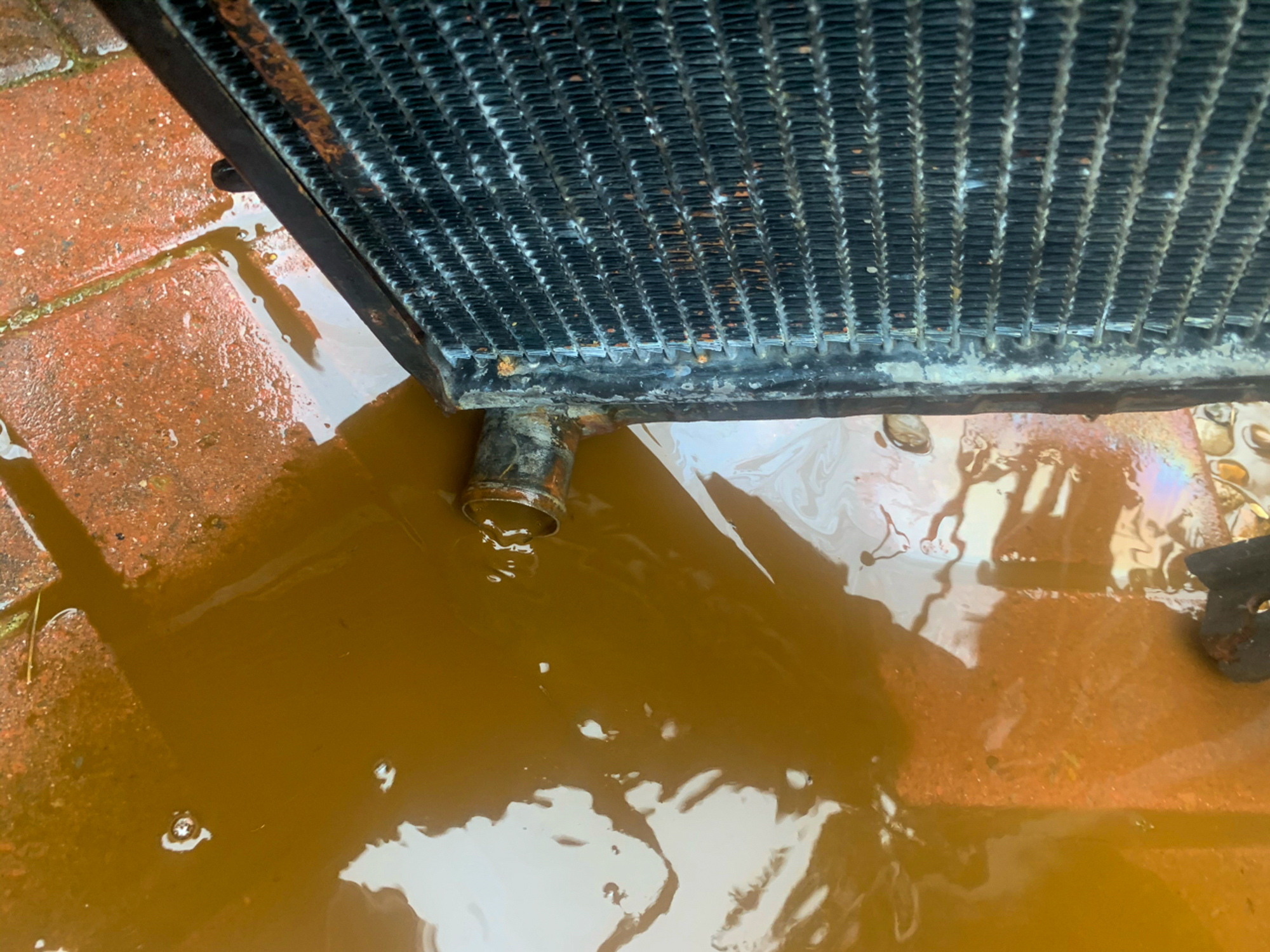
Flushing the old rad – gunge, but not too bad.

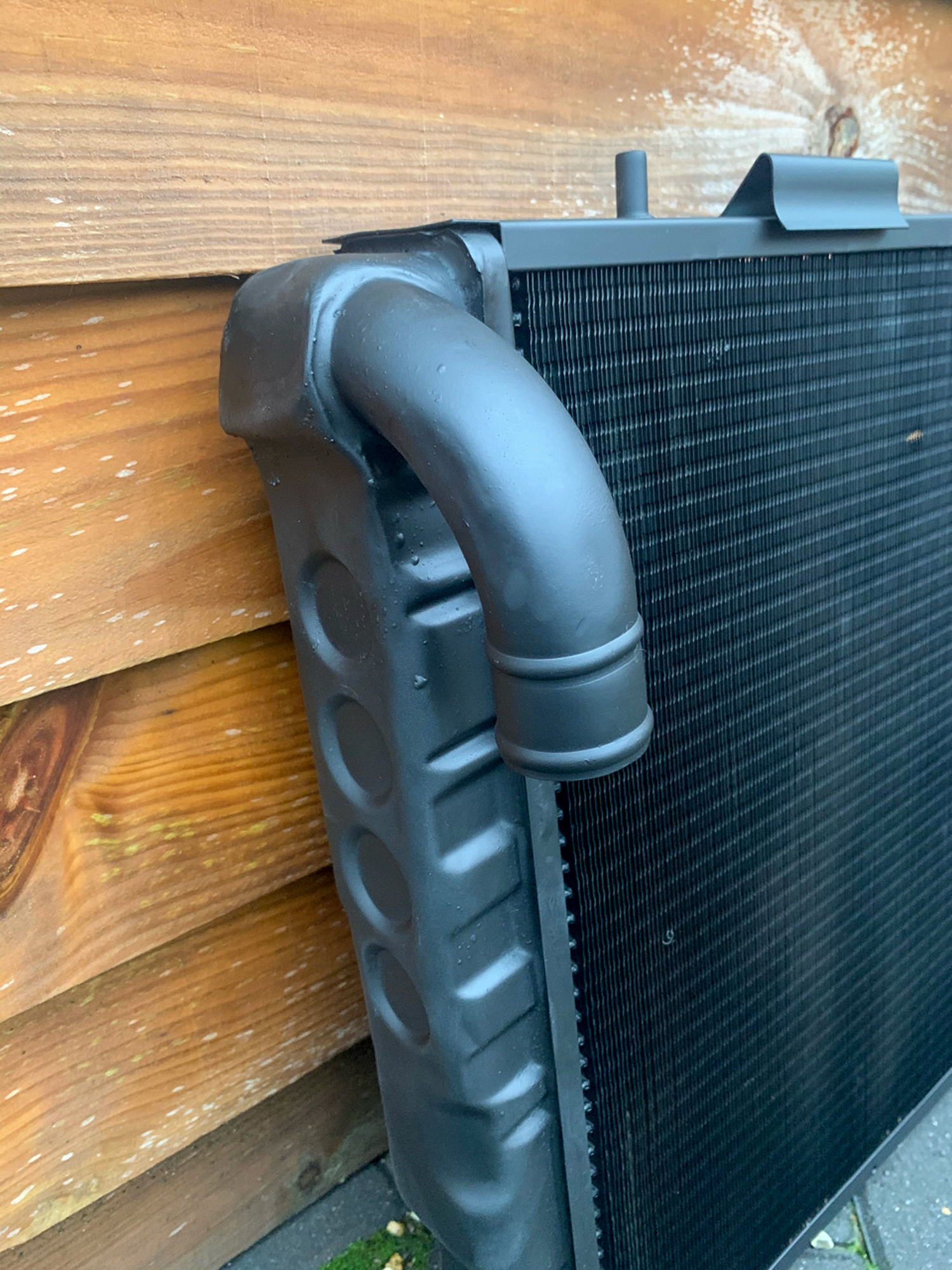
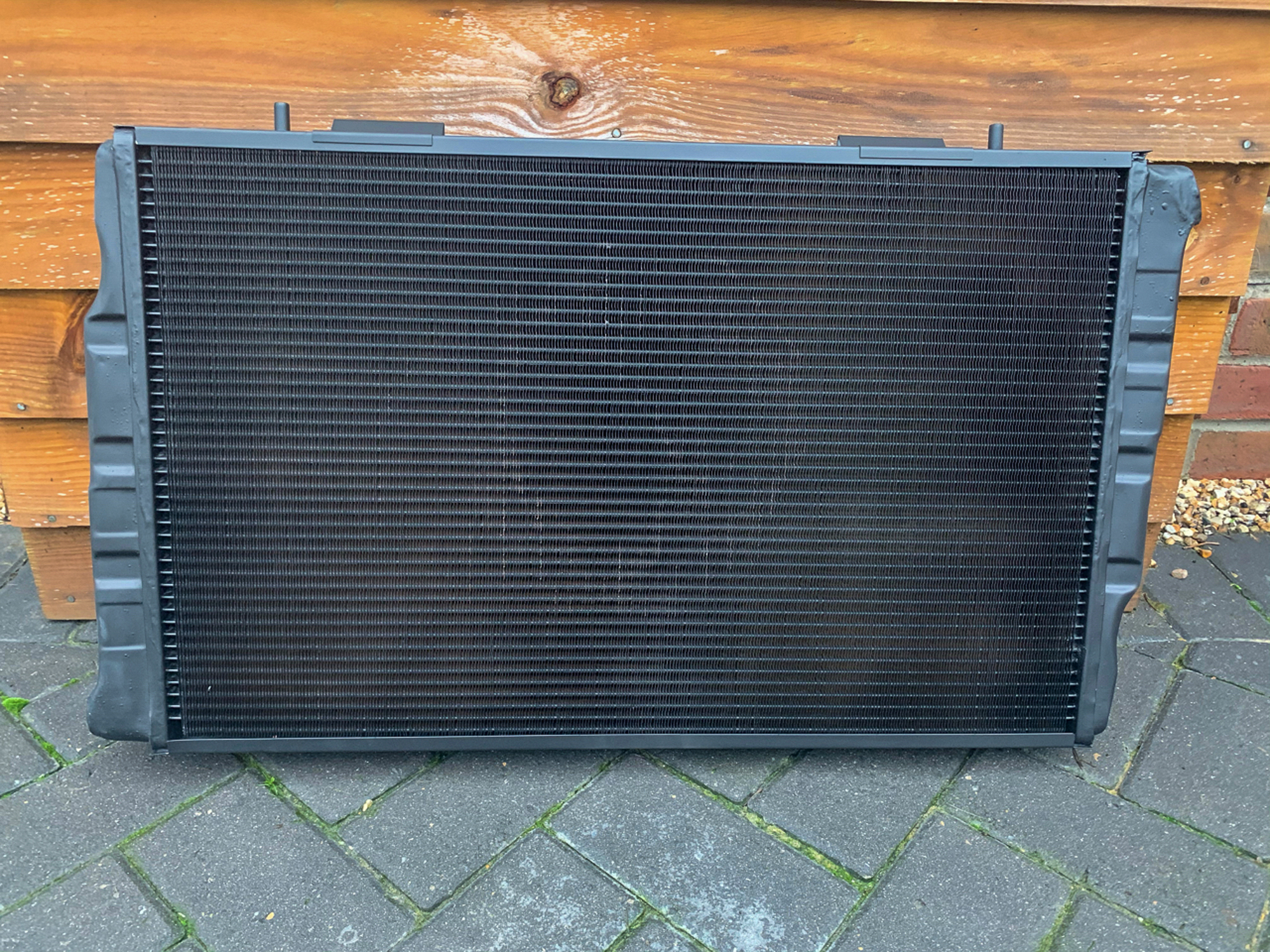
The radiator went off for a re-core with a more modern efficient core with Paul Slack ,who provided an excellent and efficient service. This is his e-mail – paulslack55@btinternet.com.

The Radiator was as I thought from a Land Rover V8, but with the inlet and outlets switched around.

Everything went back together without “drama”; believe it or not…………..
The only delay was that I wanted to replace the corroded bolts that held in the Water Pump and Thermostat housings, together with the barbs that the heater hoses attached to. It turned out these the threads were a fine thread metric and my usual supplier did not stock them. Again, e-bay to the rescue……….

The viscous fan was not re-installed though, this was replaced by a Revotec Electric fan which I have mentioned previously; the wiring for which was already in place.

New Revotec Fan.

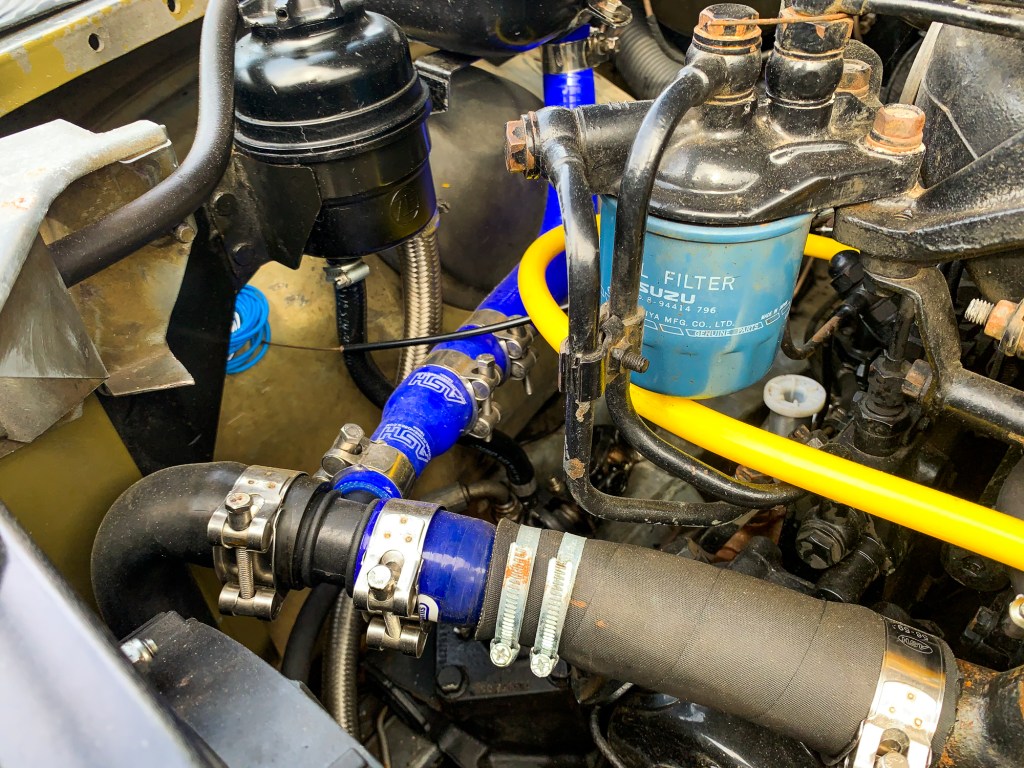
Replacing the hoses was more of a challenge than I expected though, as nothing was standard Land Rover. I measured everything up carefully and ordered what I needed in silicon. This included water and oil pipes that go to the alternator for cooling and lubrication.

Some of these pipes fitted not problem although the ones for the alternator were tricky to fit because of the room that was available.

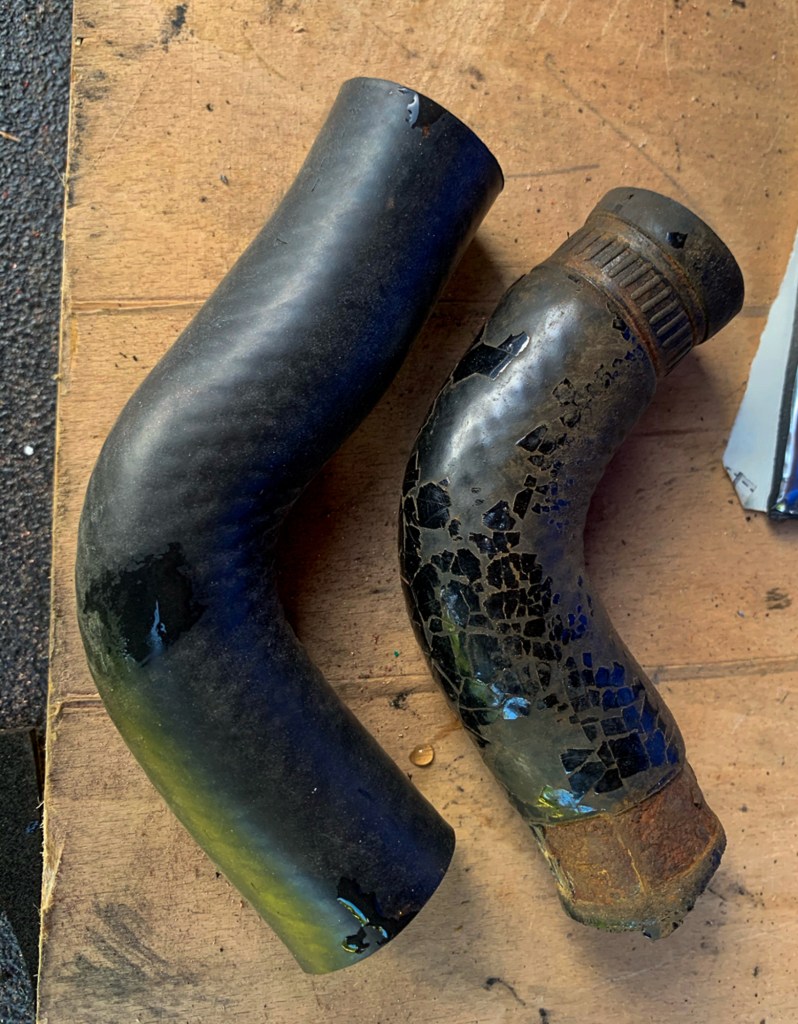
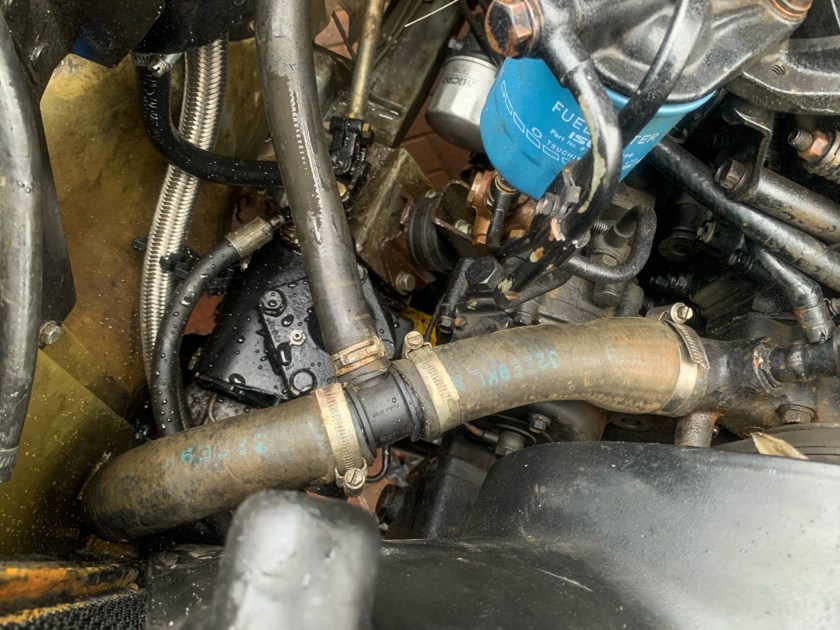
The main problem was the top and bottom radiator hoses. The top on right had to be cut to fit the sensor for the electric fan which made the length of the hose very short. Because of the bend, the silicon (which is less flexible than I thought) was under tension and just would not stay in position. A similar situation for the bottom hose on the left, which has a “T” so coolant can go up to the expansion tank, so that the coolant level can be checked easily.

Its did not help that the ends of these hoses had different internal diameters which necessitated a reducing piece.

Eventually after trying many different options I abandoned silicon (for the tricky bends) and took myself over to Paul Light Land Rover in Hordle (again!) with the original hoses which had the correct bends.

Paul, who is forever helpful, went through his stock and eventually found some hoses that had similar bends to the that I needed. I cut these down and eventually ended up with a complete cooling system.

In retrospect, I could have ordered these from Australia where they are available. but at the time I wanted to go silicon – the best laid plans.

I refilled the system with coolant and fired up the engine to check for leaks and to see if the new fan kicked in at the right time. The vehicle ticked over on the drive with no leaks which was a result. It was not getting hot enough though for the fan to kick in in. It was getting late, so I decide to wait until the next day to take the car for a drive to get the temperature up to. proper working level.

I did not know at the time, but that was the beginning of another challenge

Security Dead Locks

I have mentioned these before, purchased from Land Rover Defender Security, also the fact that we are trying to make the vehicle as secure as we can during the build.

The security hinges, covered previously, and the dead locks fall into the category of “visual deterrent”……move on, find something easier to steal is the message.

The locks, one for each front door and one for the rear, come with common keys and a set of very blurred instructions, which, are not clear; nothing new then! One page even tells you what to do, with pictures and then tells you not to do what is shown as the measurements are incorrect.

So, this falls into the list of Land Rover jobs entitled “This is going to be a pain”, rather than the list entitled “relatively straightforward” that then turns out to be a pain. This why the locks have been sitting on the shelf for a few months.

Anyway, the day has come, work has started on the interior and the rear door needs to be stripped down as there is some corrosion around the seams; so a good time to do the locks. Luckily, the back door is far from a basket case, and some rust removal, primer and paint, will keep it in service for a few more years. The rear wheel carrier needs to be unbolted and the fitting plate for this also needs rust-proofing and a re-paint.

So onto the fitting the rear lock.

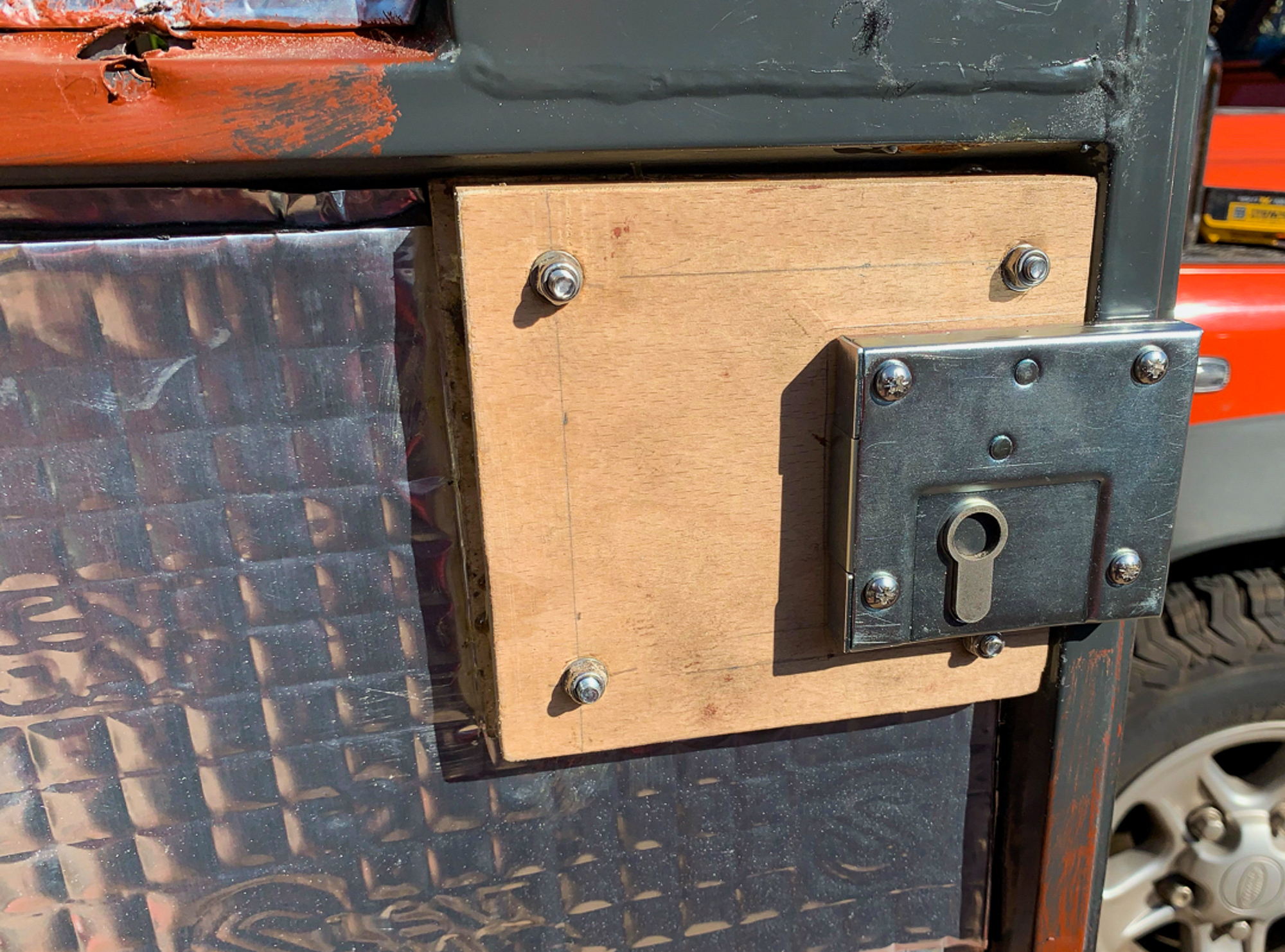
There is nowhere to mount it on my door! – The lock is clearly designed for the later 2007 on – Puma models which have a plate under the standard lock, onto which the dead lock can be mounted. So I bonded a couple of pieces of plywood together to get the correct thickness and fitted this to the door, to give me a mounting point.

I took the opportunity to add some sound proofing to the rear door and to change the standard lock, that was starting to jam.

I also moved the position of the lock down a little from the suggested placing. This moves the key position on the outside of the door down, so I would still be able to use the lock when fitting a slightly larger spare wheel – more forward thinking!

Rear lock position

The lock keep was straightforward to fit, so onwards to the front locks.

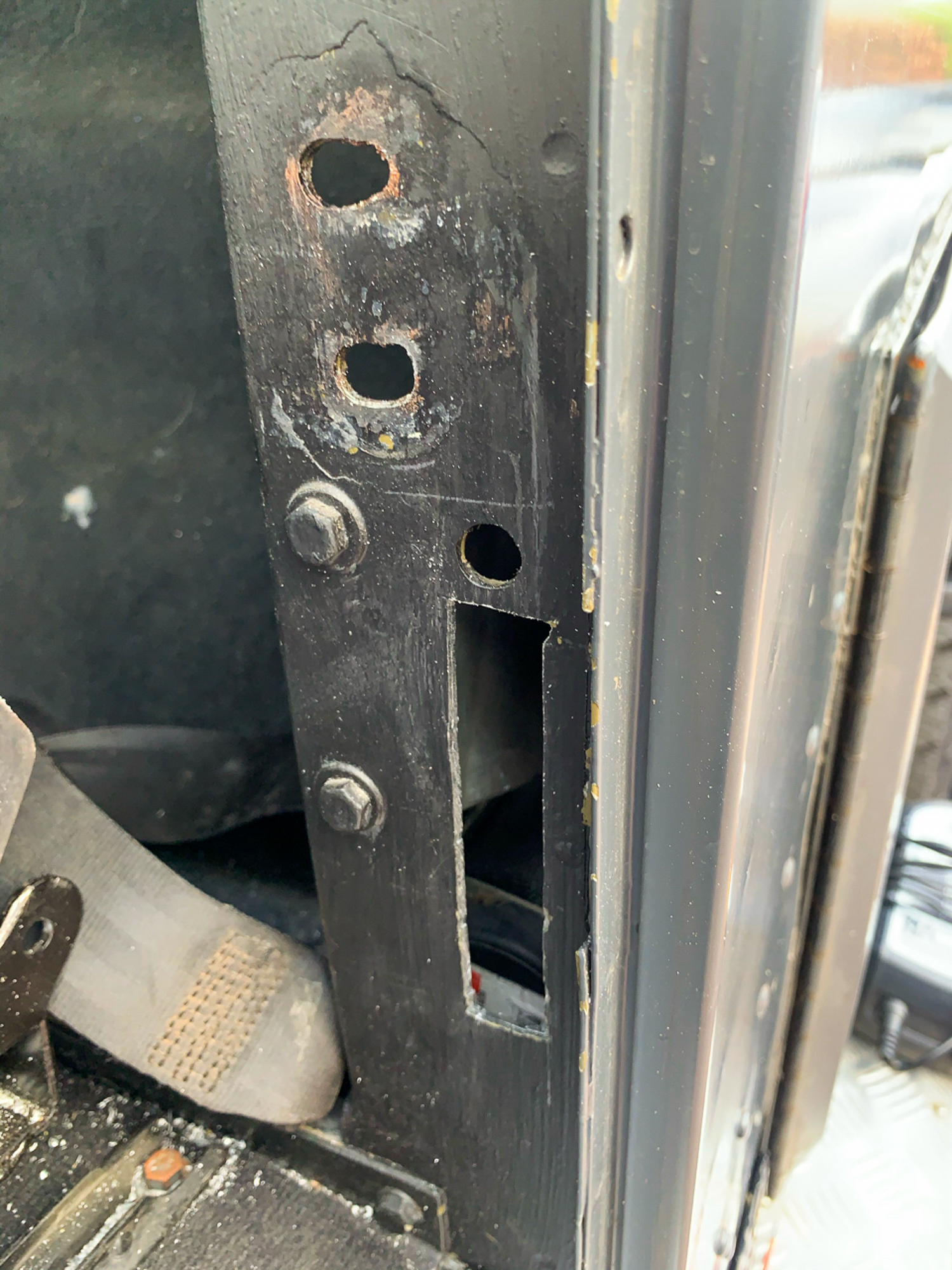
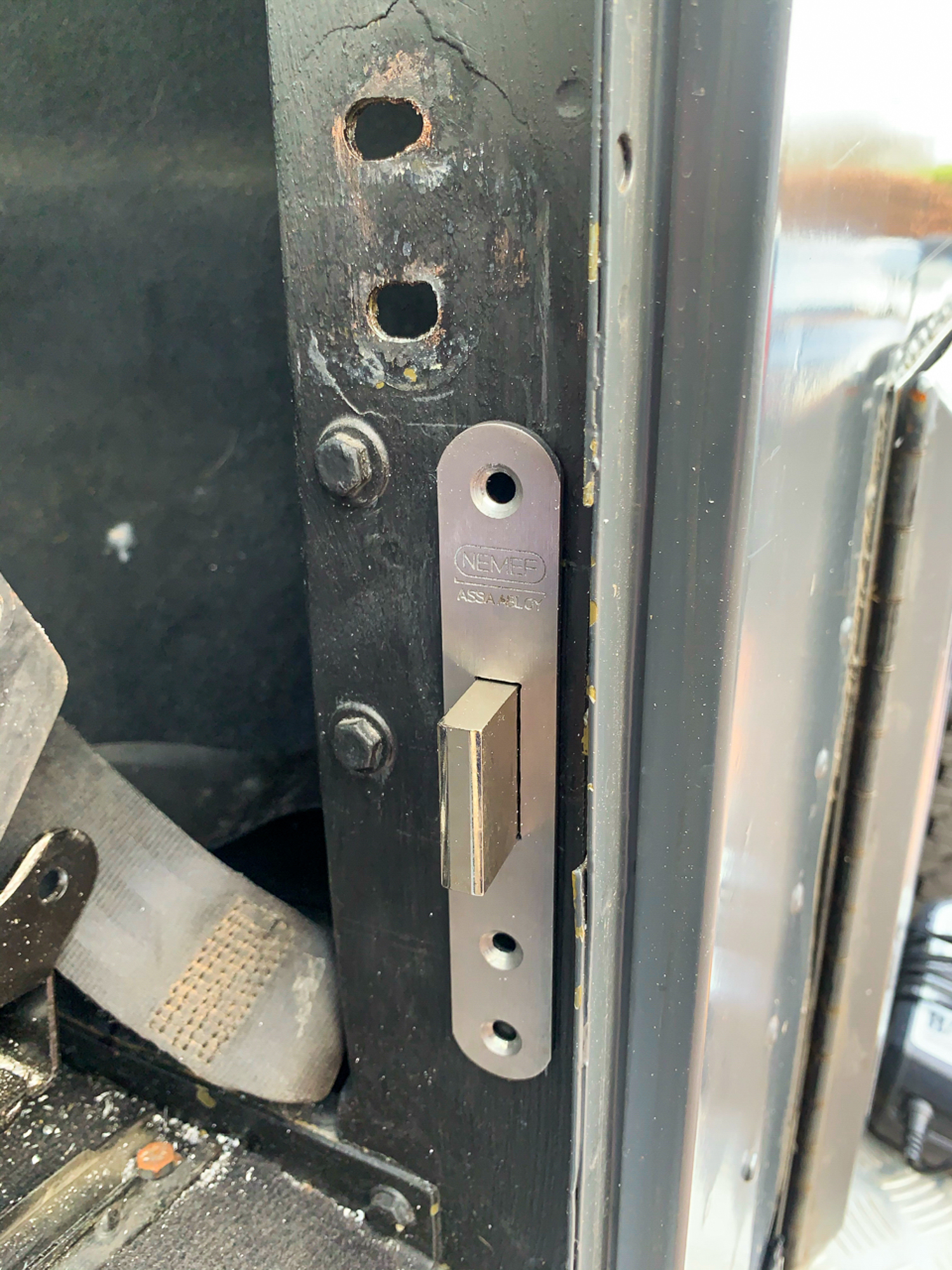
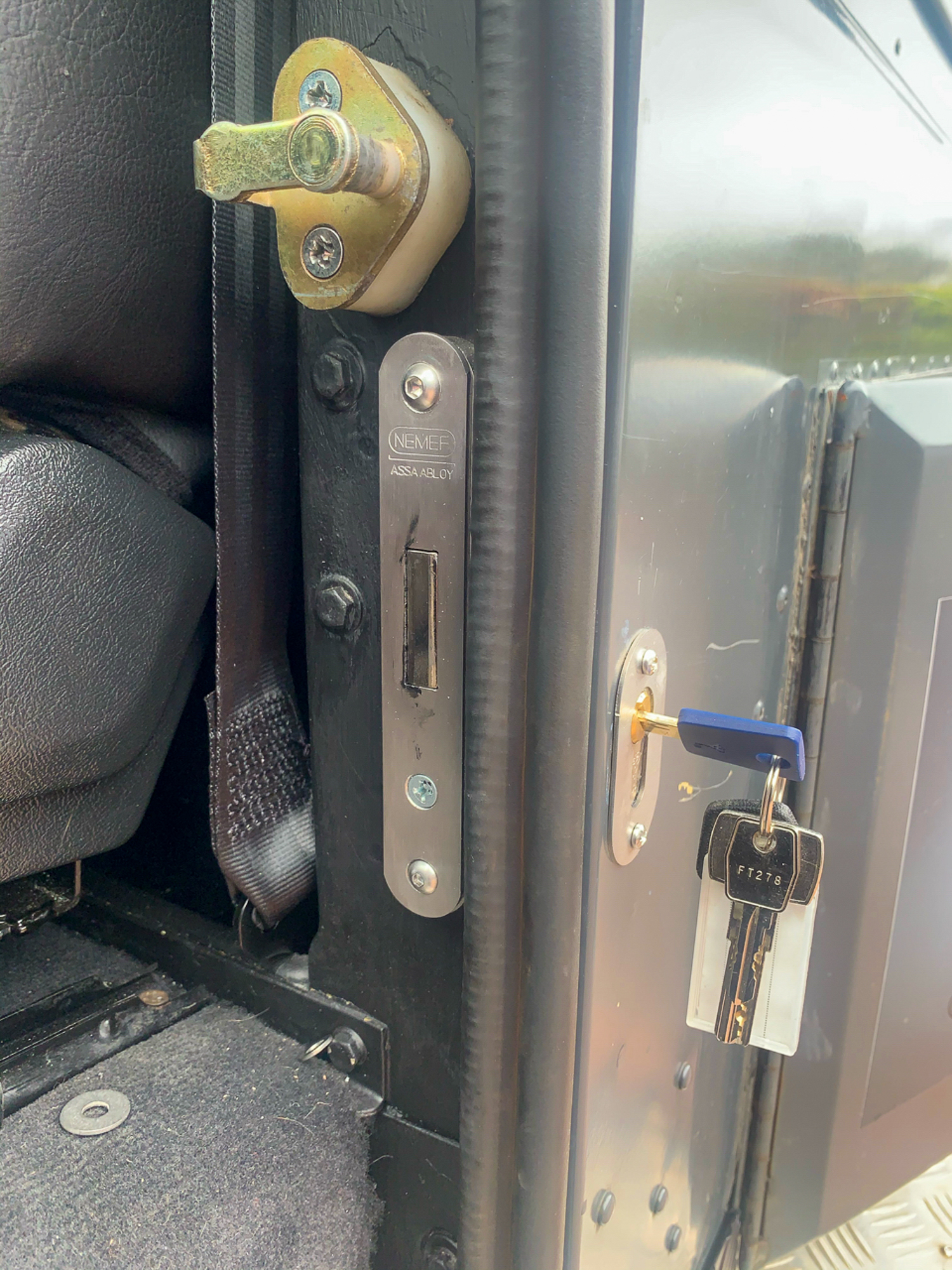
These were tricky as there was little room for error, I decided to ignore the measurements in the instructions and work them out for myself. The lock itself fits into the door post and not only has to avoid the existing door shut catch, but the seatbelt mounting, which sits behind the seat inside the door (B) post.

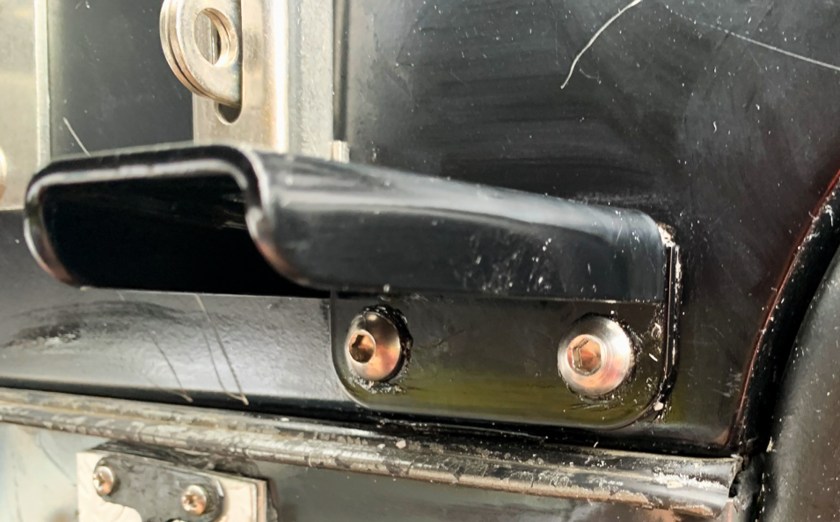
After some careful measuring and judicious drilling, not to mention the “getting the correct size” with the file, the lock eventually was bolted into place. I removed the door shut, to make access easier, hence the two holes above the lock.

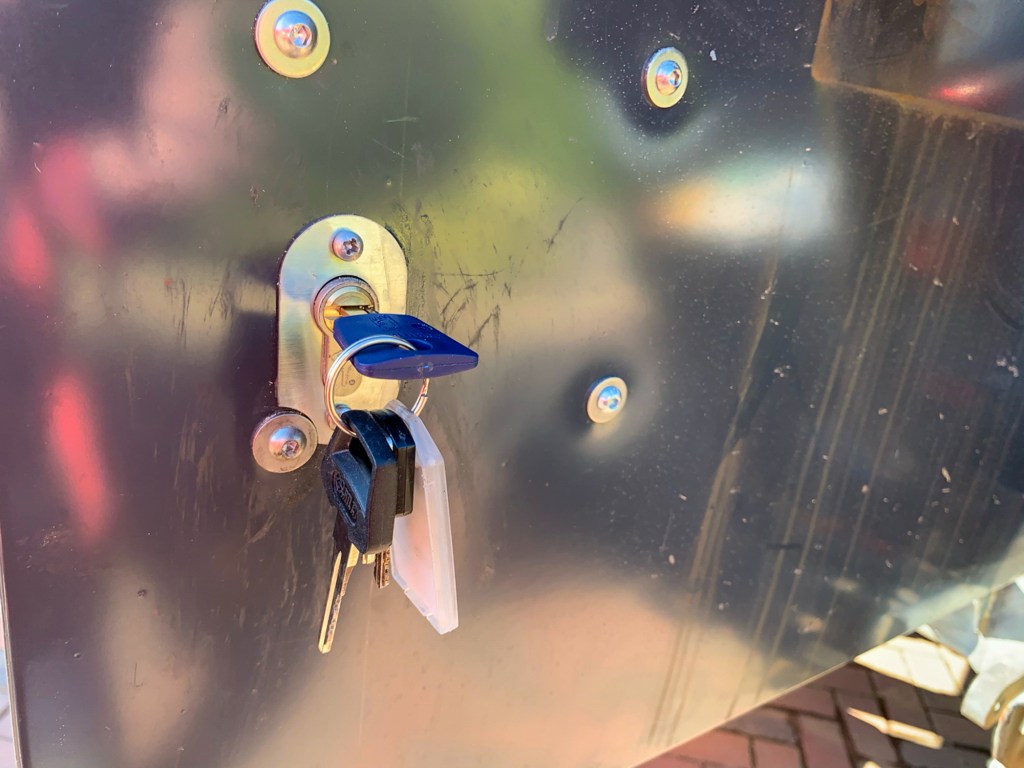
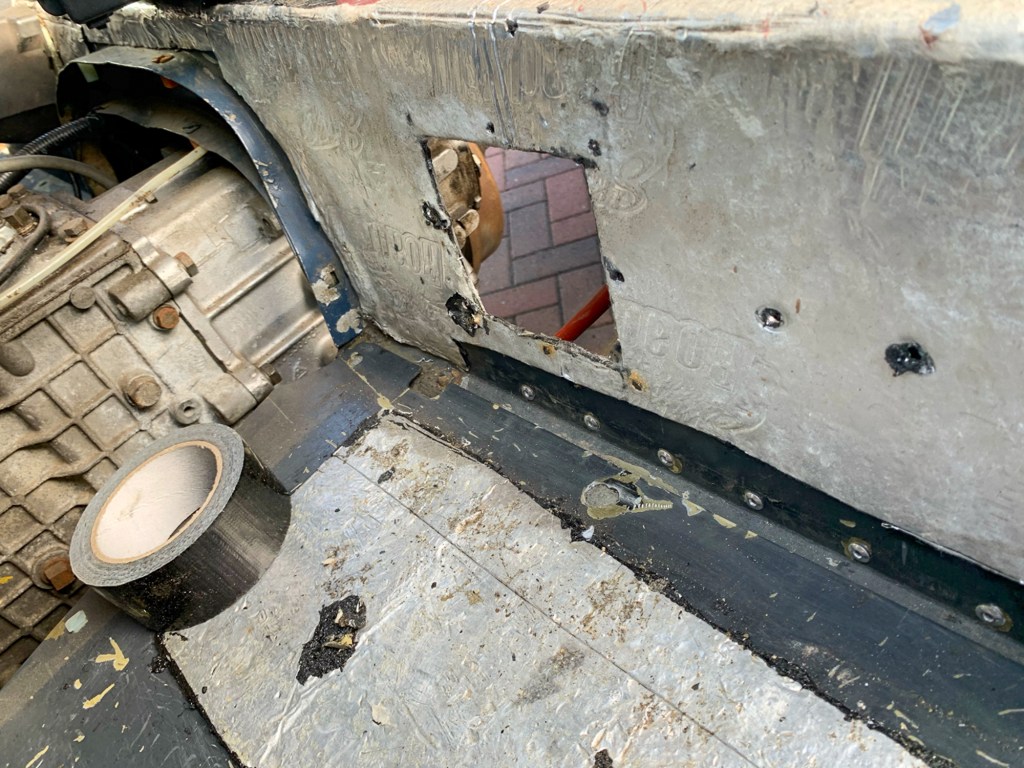
Then, I had to figure out where in the side of the car I needed to drill the hole for the key to fit. I used the measurements given as a guide and managed to get a pilot hole in roughly the right place. It was, as they say “a right game” to enlarge the hole to get the key to engage on the lock and to turn, without making the hole so large as it would not be covered by the trim. Anyway, eventually this was achieved; the word “eventually” apparently, means a very long time………

Lock cover fitted just behind the front door.


So all I had to do now was fit the keep in the door, in the right place. An issue here was that I have Puma Doors on a 1989 body, so the where the lock throw goes through the keep is perilously close to where the standard door lock is fitted. I did think to start with that it would foul and not fit.

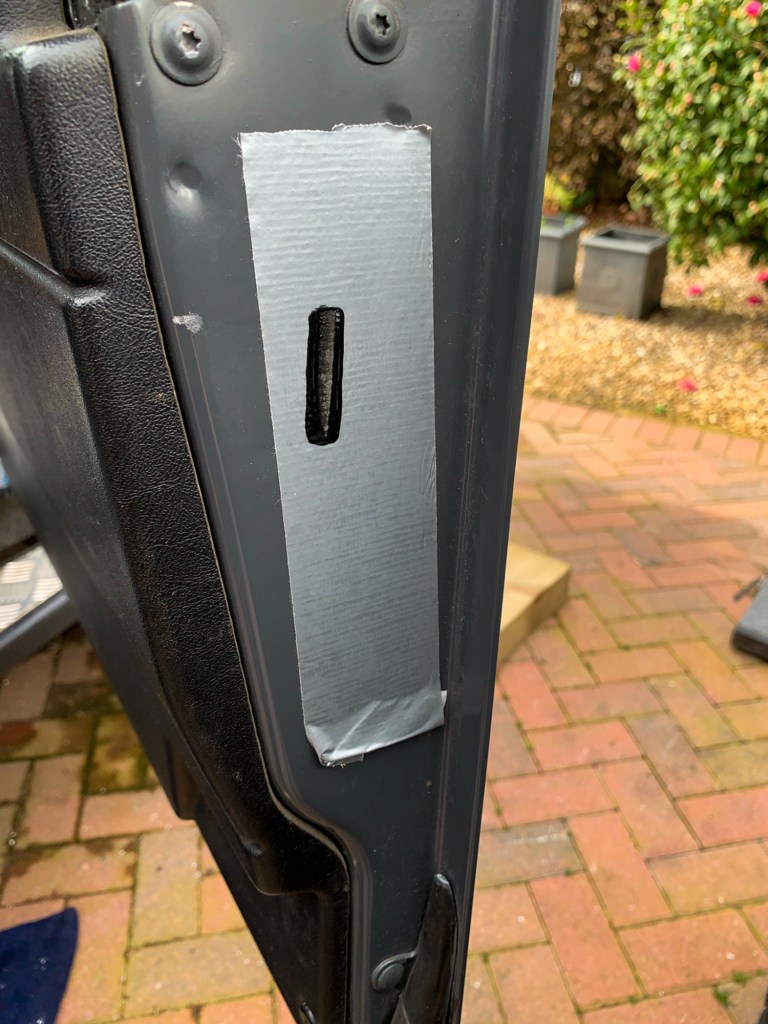
The puzzle was exactly where to drill the hole………….so I place a piece of masking tape on the door shut and put a large blob of paint on the lock, shut the door and operated the lock a few times – this gave me a pretty good idea of where to drill – not bang on, but near enough. Out with the file again!

Door lock keep template.

It was a painstaking task to get the hole and the keep fitted so the the throw would fit, but I got there in the end. A learn from the first door, was to tighten the actual lock in the door properly first; I got it all to fit and then tightened up the lock and then had to tweak the keep as the position had changed. I suspect that this might be an ongoing issue when the door moves with use – we will see.

Overall, a good job done and very pleased with the result and the product, although a decent set of instructions would have been helpful.

Battery Isolator – A short post with a story.

We all know that Defenders are not exactly secure and we are gradually adding security features into the build. A previous post cover the fitting of alloy door and bonnet hinges with security bolts as a visual deterrent.

The Perentie had a standard battery isolator fitter on the passenger seat box just behind where your legs would be; this just had a regular red plastic key. I ordered one that had an actual key from Land Rover Defender Security.

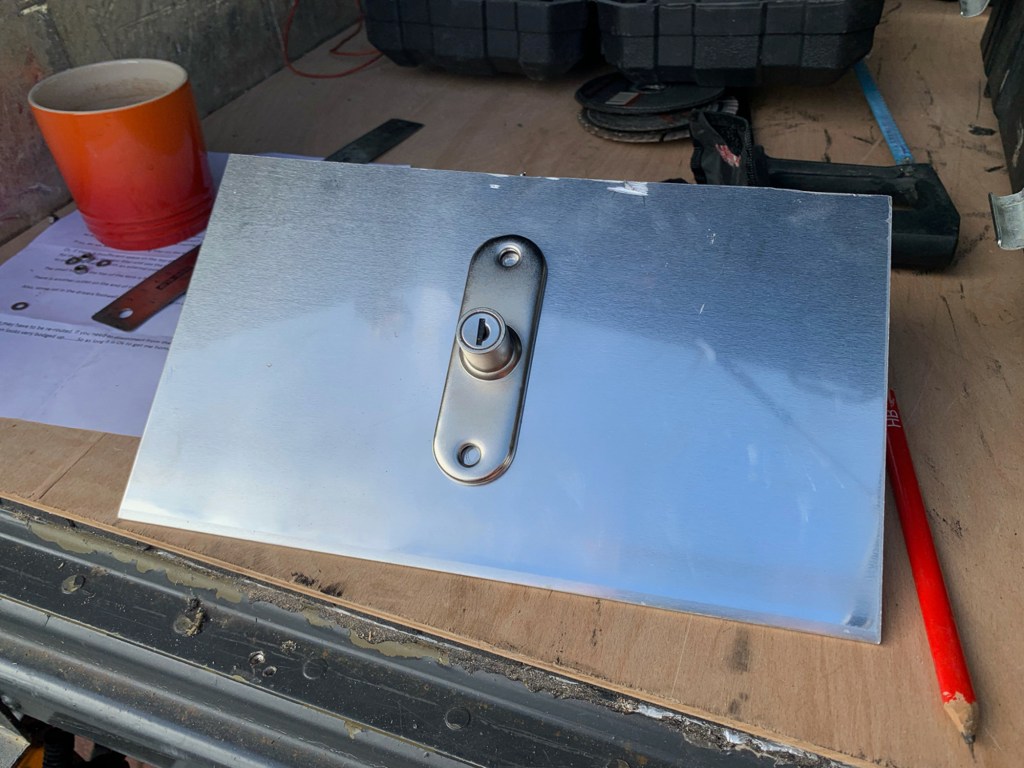
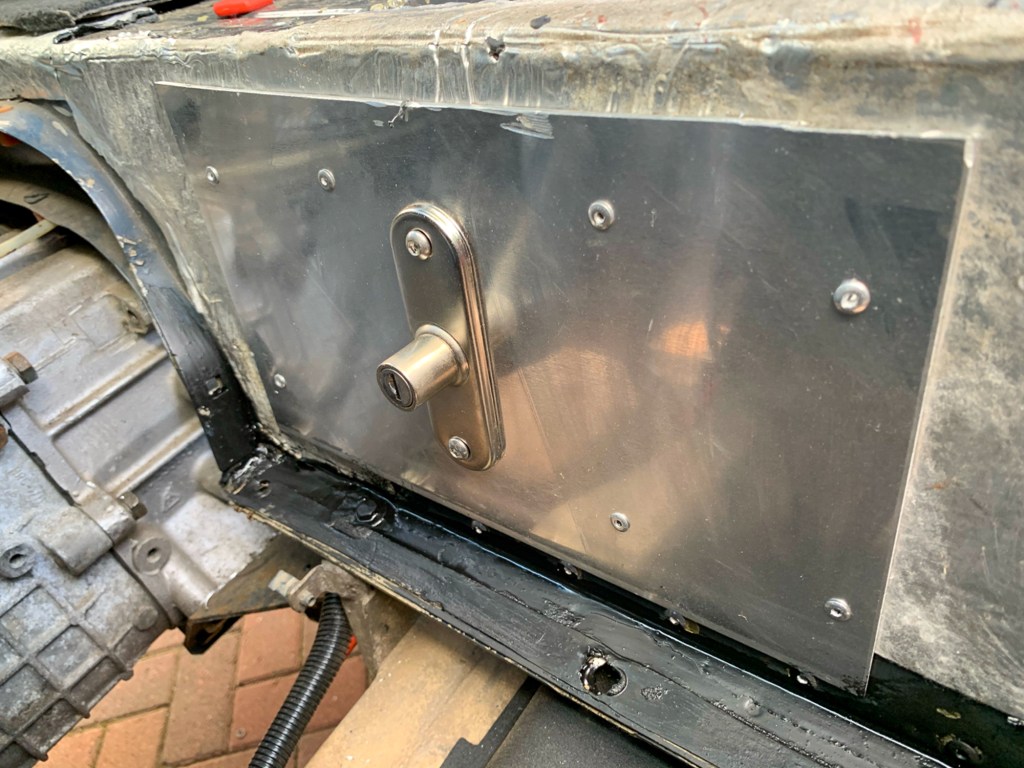
Removing the old isolator left a huge hole in the seat box. So I made up an aluminium plate and mounted the new switch in that.

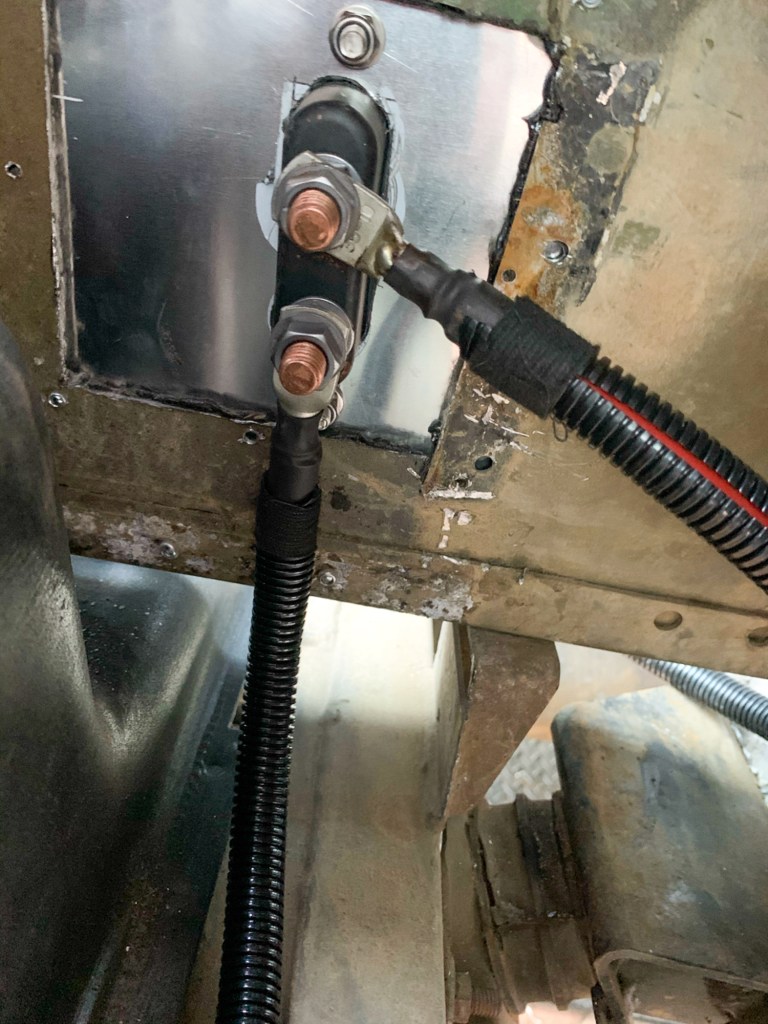
When I moved the battery, I had left sufficient slack in the main cable to allow me to cut and link the main starter cable into the isolator – sometimes forward thinking works…………

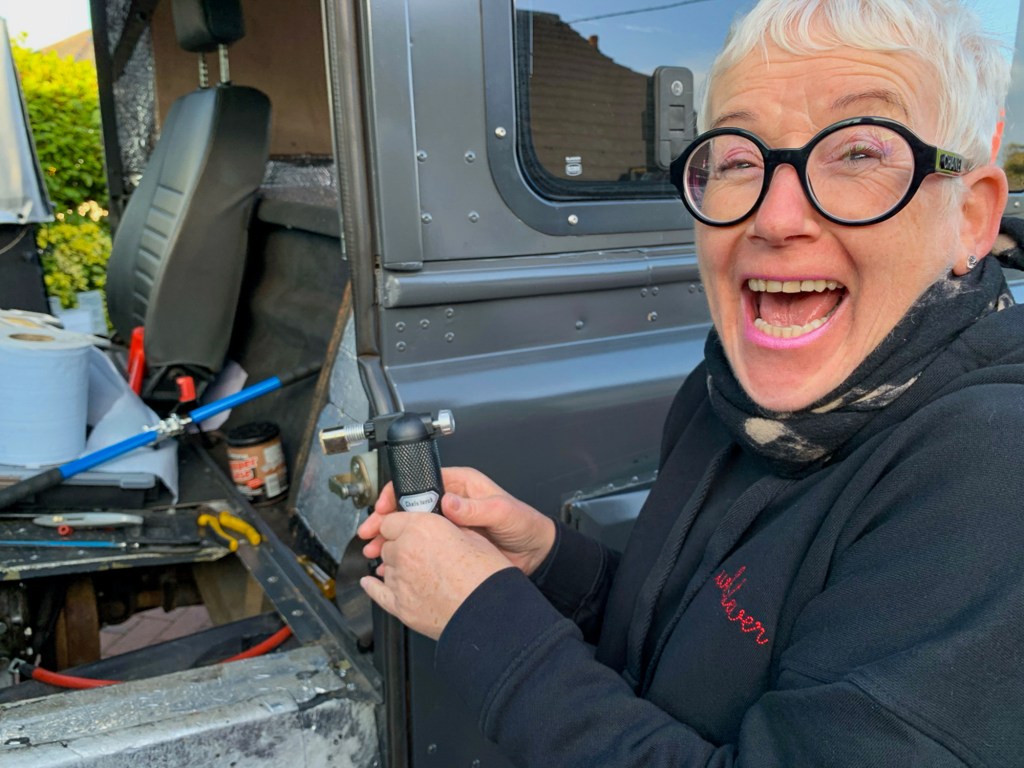
There was not loads of room to crimp the heavy battery cables, so I enlisted the help of Benita to hold the wires whilst I crimped – we added some solder to the joint, just to make sure! – Benita was in charge of the heat, we used her cooking blow torch.

The seat box was later trimmed with carpet; overall a neat job.

However, when the starter motor failed, which is covered in another post, we identified that the isolator had also failed. This became apparent when we were checking for current at the starter motor; one of the initial checks. We needed to bypass the isolator to continue fault finding.

Land Rover Defender Security did send me a replacement, which did sit on the shelf for a while before I got around to fitting it. It was a job that I did not really want to do as it involved removing the carpet that I had carefully laid.

Anyway, I did the job and then when testing the device realised that they had sent me keys that did not fit it! – I should have checked.

I did send them very polite e-mail asking for a solution and received no reply. I then called a couple of times only to be put through to voice mail – two calls, two messages – no response. I then sent both devices back “signed for” asking for a refund to date – no response. So I will not be ordering from them again.

I hope the door locks I bought from them are OK – more about that later………….

I got another identical unit from e-bay – £10 cheaper – works just fine.

A learn here is that the isolator cuts power to anything the is powered by the main starter battery, which includes the radio – which promptly forgets all of the settings the you have carefully programmed into the endless menus. So I will be running a supply to the radio from the leisure batteries once they are fitted.

Thinking about the interior – Rear (Jan 2020)


Since stripping out all of the storage units and carpet in the rear in order to cure a leak, we have done nothing than use it as a tool storage areas, and very useful it is too!

Incidentally, the leak was caused by water seeping through the rivets used to secure the hard top. Either the rivets were too small, or the holes too big. Anyway, I drilled them all out and replaced them with Stainless Steel pan head bolts with a side serving of Sikaflex.

So we have a blank canvas, so we need to do some colouring in, give us some structure, so that we can plan what the interior will look like.

Just the aluminium floor and sides with some basic sound proofing put in by a previous owner.

I have to be aware that we have large and very secure gun case/sliding drawer that we want to use; it is a metre long and almost fills the width of the vehicle between the wheel arches. This means that we cannot put too much insulation/sound proofing at the lower level as it will not fit! We want to place this near to the back door so that the drawer opens into the outside when the back door is open. This will also serve as a step up to the bed in the roof tent.

Similarly, we have a storage unit that will sit nicely behind the front seats, this also fits snugly between the wheel arches.

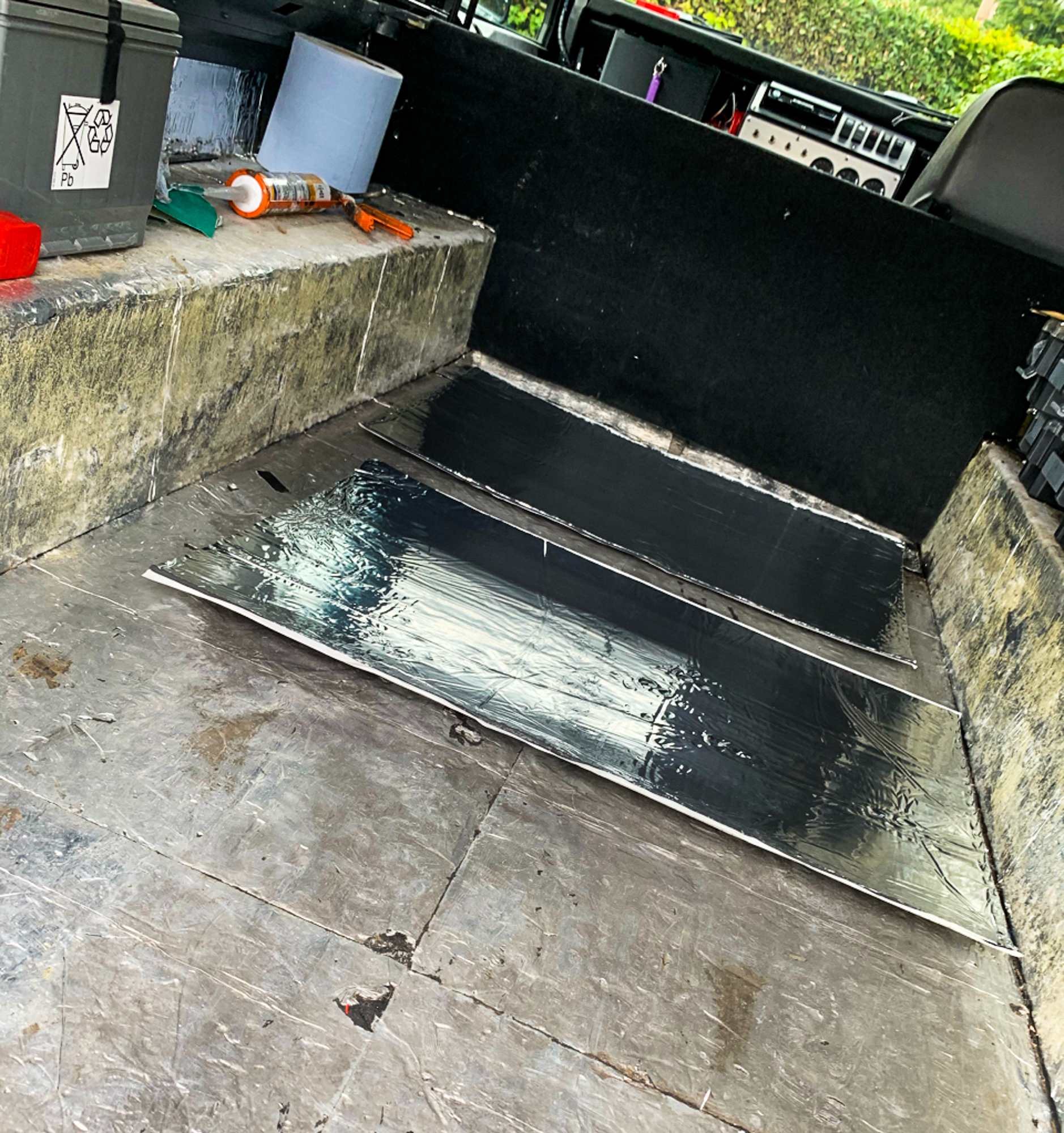
S0, lets start with the floor, there is some sound proofing there and there will be “furniture” on the top of most of it, so I decide on using Dodo Thermo Liner, which is insulation with sound proofing properties and quite thin – a very good product and very sticky.

There are many sound proofing/sound deadening products and they can be quite confusing. You just have to choose the combination that you think will work for you. I always use the sound deadening shop, very helpful and fast delivery.

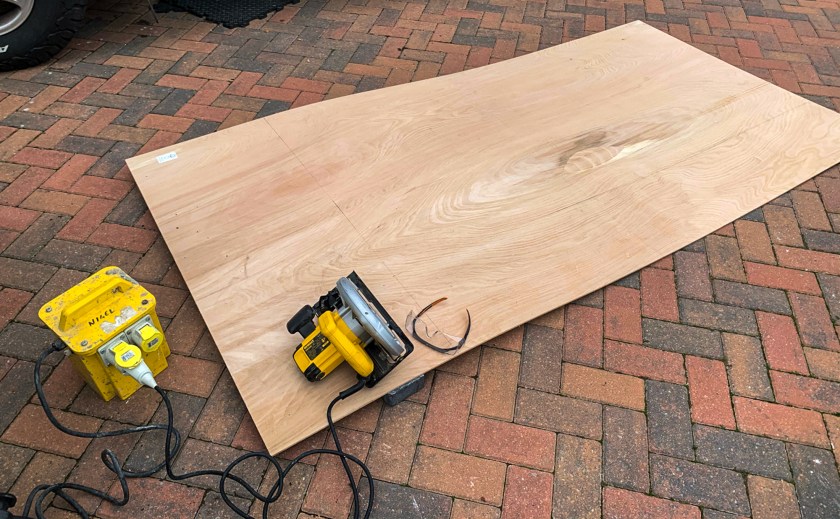
The some ply over the top. I used 6mm, ideally I would use thicker but aware of weight and the fact that there will be things on top of it.

Marking up the floor.

This will ultimately be covered in carpet/van liner which will extend up the sides of the vehicle, giving us a good base of sound proofing and insulation.

I made covering for the top of the wheel arches in a similar manner which will be trimmed later; so onto the vehicle sides.

This is a bit more tricky as one side has a window and neither has much to screw any covering to. I also need something quite secure, at least on the drivers side and I will want to fix cupboards etc to “something” later on in the build.

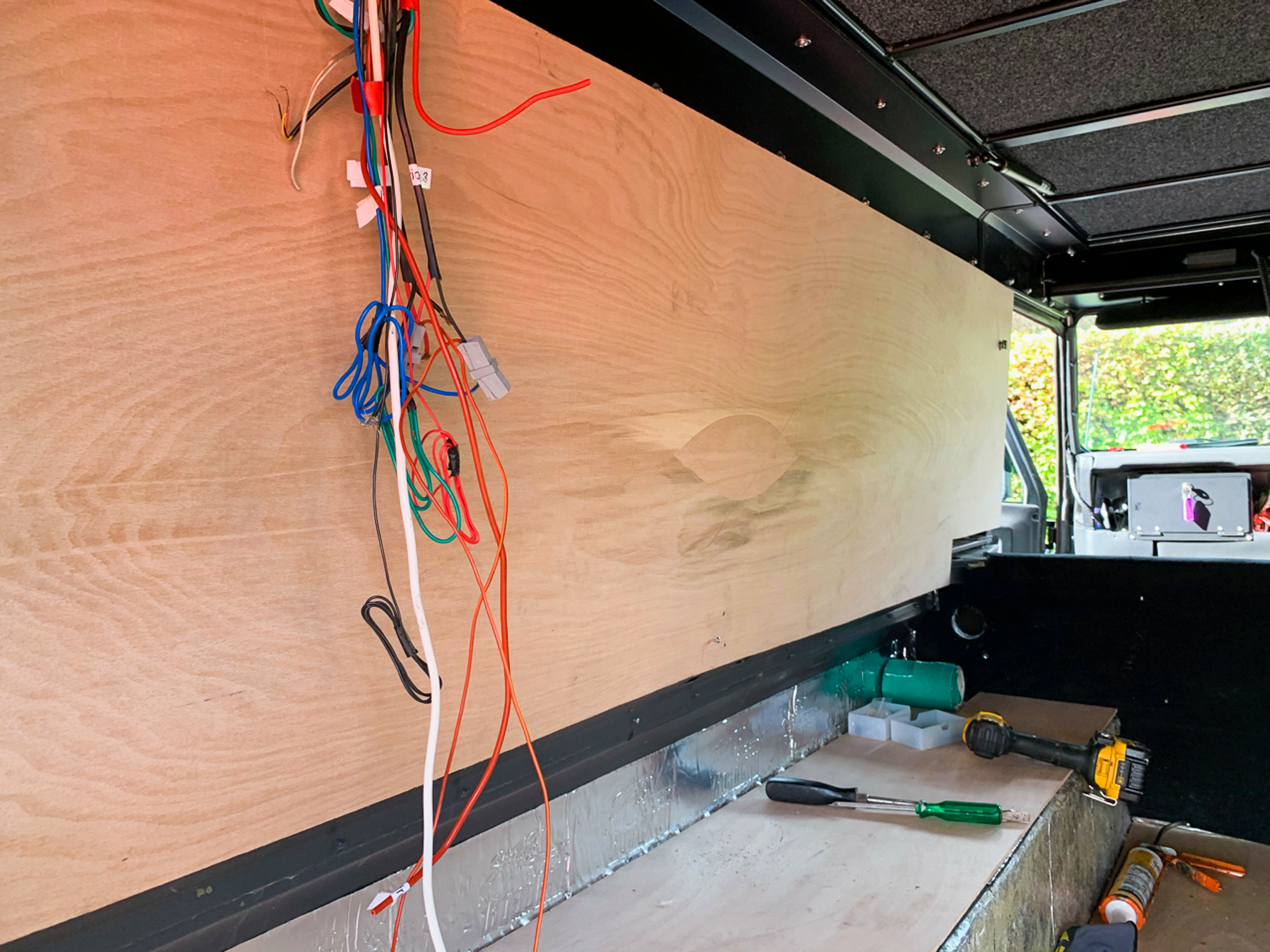
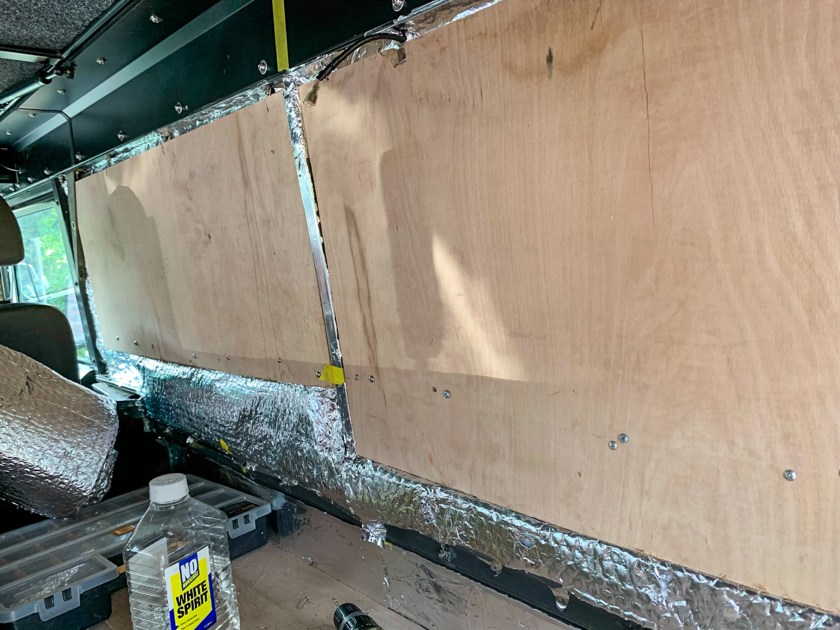
So I added more Dodo thermal liner to the sides, on top of the existing sound proofing. I plan to fill the gaps with a thermal fleece and add a vapour barrier once all is in place. I then cut 6mm ply to fit on both sides, trimming around for the window. Easy, just opened the window and drew my line.

I then constructed a frame to screw the ply security into.

The tape will give me clue later where the frame is. I did pre-drill the holes for the ply, so I know exactly where they are. of course, that will be trimmed as well…….. The square of thicker ply is to mount a switch panel and maybe the remote panel for the battery control unit.
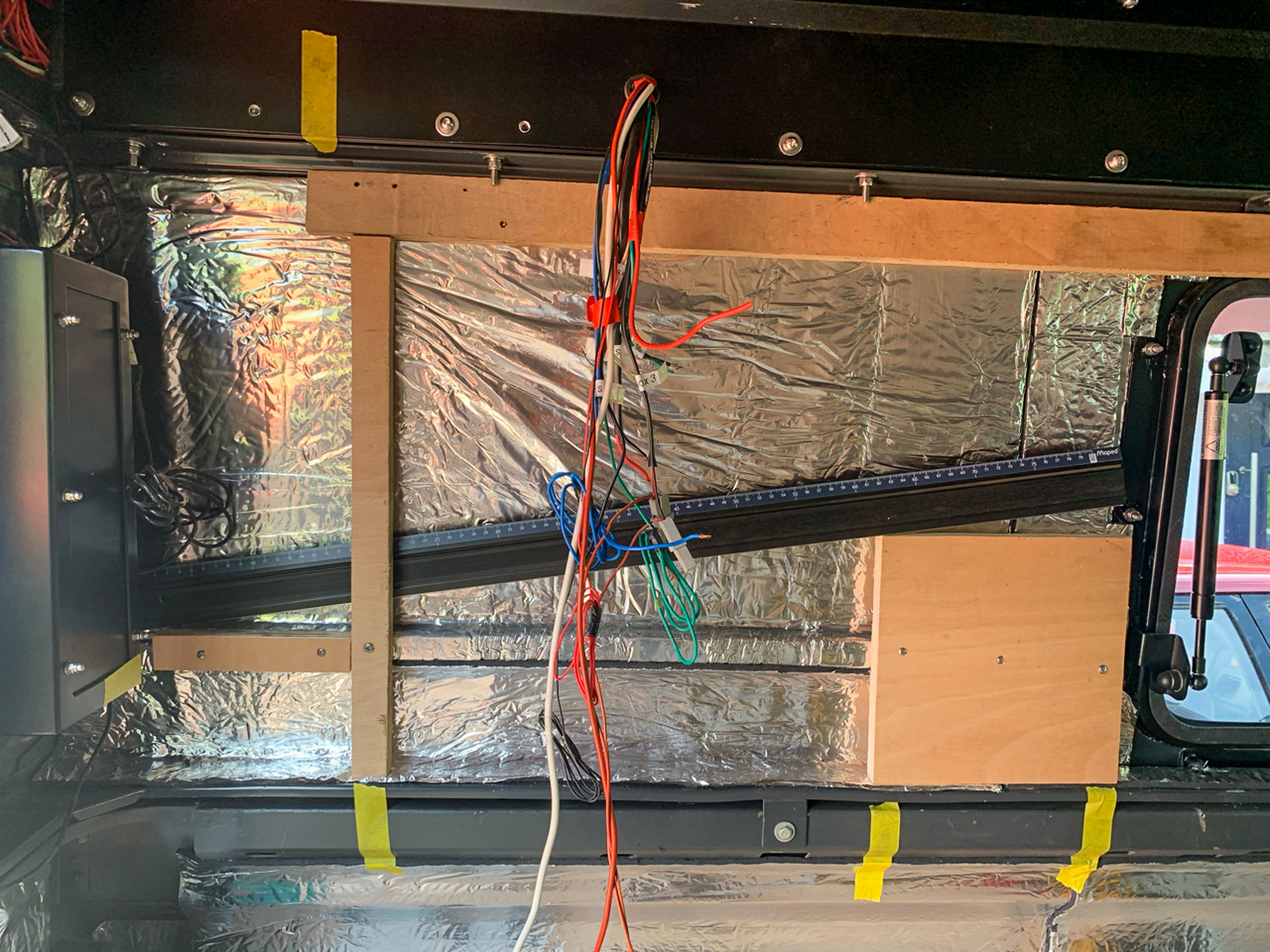
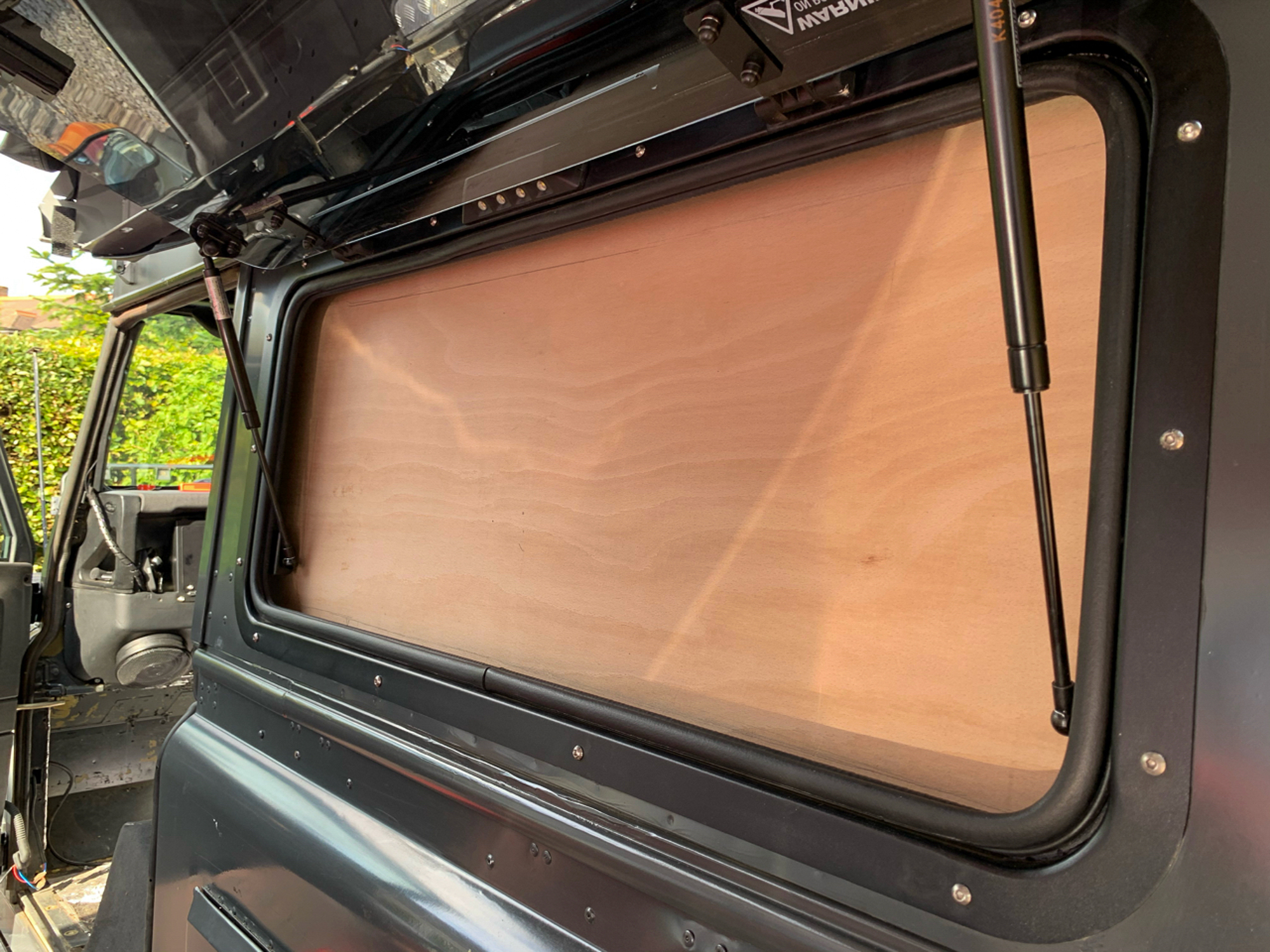
On the drivers side I added 12mm ply to give me the bass for screwing cupboards etc to later on in the build. This will make it a cinch too add the top layer once it it trimmed up. This has the vapour barrier in place. The yellow masking tape tell me where the supports are on the aluminium panels, so hopefully I can drill in the right place later; if needed.

The plan is to trim the side panels and the panels that cover the top of the wheel arches, but more of that later………..Benita wants red……..!

Installing the Second Fuel Tank and related work……

This a job that was planned for early 2020 but got out on hold……..
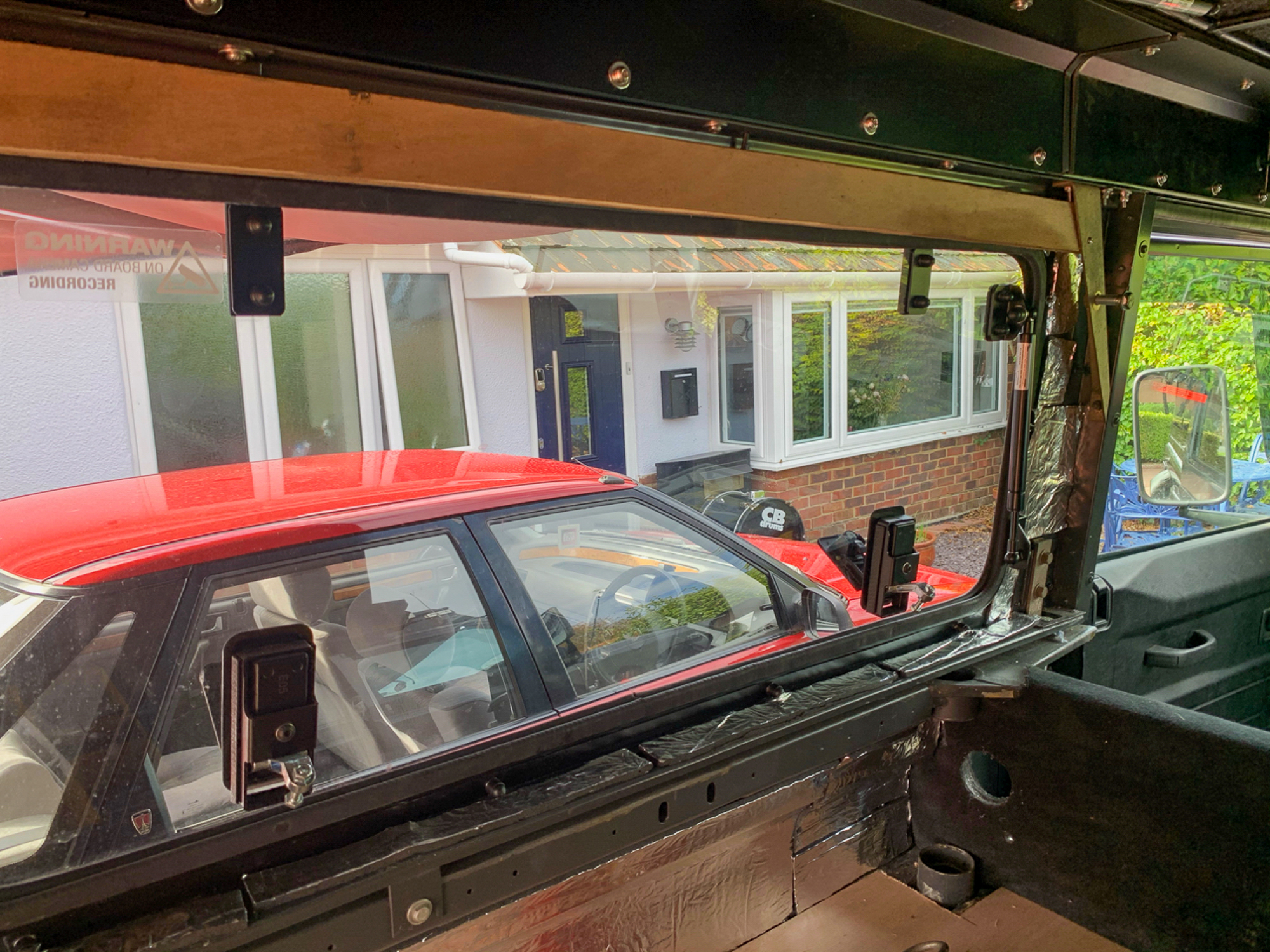
The Perentie 110 has its fuel tank under the drivers seat as in a 90, rather than at the rear like a standard UK made 110. This was to enable the installation of the spare wheel under the deck at the rear which was a requirement of the Australian Forces, when the vehicles were commissioned.
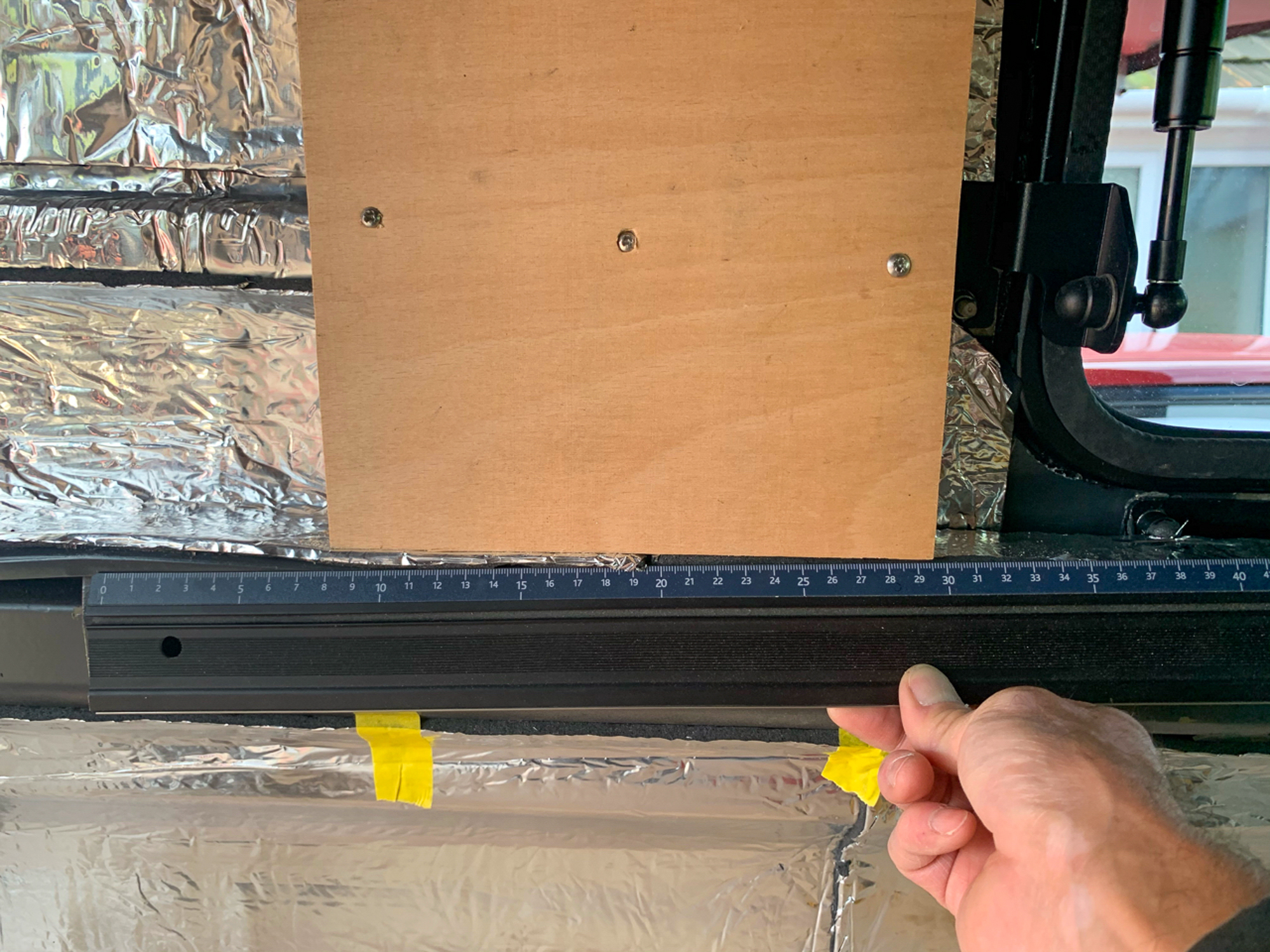
So, to increase fuel capacity, a second tank could be installed under the passenger seat; to make way for this, the battery had to be relocated, see previous post.

Installing the tank was well beyond my skills and I had already discussed this with Neil Reid at Reid Performance in New Milton. The car was booked in during September for the work to be done. At the same time, I asked Neil to cut out and replace a section in drivers footwell which had corroded.

In preparation, I removed the passenger seat and frame and removed the carpet and some of the soundproofing from the front seat boxes. The plan is to strip the seat boxes completely, add soundproofing and insulate them before adding new heavy duty carpet. The issue here is that you have to careful on the total thickness, as there is not that much room around the seat bases.

As usual Neil did a fantastic job and made up the brackets needed to install the tank to the bespoke chassis, after cutting out the seat-box on the passenger side.

Regular readers will know that the Perentie has a galvanised chassis, however the bulkhead is not galvanised. This is not usually a problem with imported Perentie’s as they come from a warm country. However, we are not 100% sure of the history of ours, apart from the fact that is was used by the Australian Air Force and may well have been used in tropical climates. Also, after purchasing, we discovered that is was a non runner at auction. During the restoration was have notes a number of issues, and believe that at some point the vehicle may have stood in water for some time.

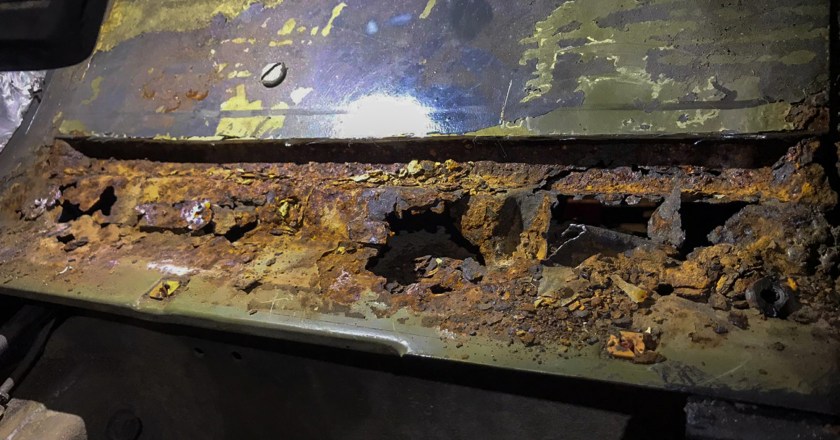
It is worth noting that mud collects on top of the chassis member under the footwell and rots the floor – I will be keeping this clean.

As with all things Land Rover, the corrosion on the drivers side was worse than expected, but a plate was made up, welded in and rustproofed. There remains a leak on the drivers side which I need to resolve before fitting soundproofing, insulation and the carpets.

The seat box covers which allow access to the fuel tanks (battery when is was under the seat) were very bent and did not fit properly. For some reason these were not easy to get hold of as a Land Rover part, but I managed to source a couple of aftermarket parts from e-bay. There were really well made but still needed a trim with an angle grinder to get them to fit properly. A fault of the seat boxes rather than the manufacture of the part. I also had to fit the clips that kept the covers in place, as these were missing.
After that a coat of paint to tidy things up, some 4mm Silent Coat Deadening Mat was added over which I added some 4mm Dodo Super Liner for insulation.

I replaced the seat frame on the passenger side and as it was in fairly bad condition, but re-painted the drivers side; they are expensive!

I have some cill trims and corner protects to fit later on, once the carpet has been fitted.

Time Flies – Was the last post really in October?

Well, Yes it was………..but that does not mean that work stopped – Oh no, definitely not.

Most days during the Winter and Early Spring I was out there on the front drive doing something. Exactly what, you will find out soon, as I will be catching up with the Blog posts over the next few weeks.

But as with everything Land Rover, the build turned out requiring more work as each day passed. Given that this is a Perentie and I am building a Camper, nothing is standard, nothing fits, and every day, is a problem solving day!

Having said that, as I write this in April 2021, progress is being made and Perentie is “getting there”.

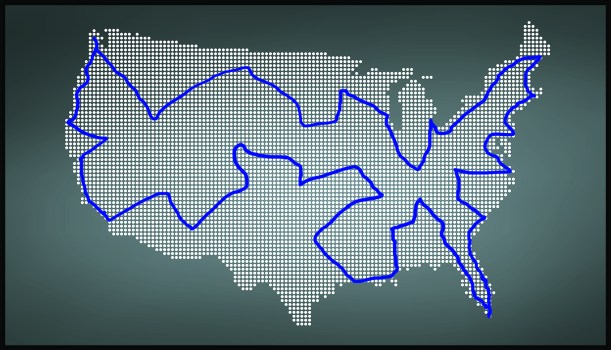
If you have read previous posts, you will know that the premise of all of this work, the goal if you like, is a road trip around the USA.

Back in January 2020, it became obvious that this was not happening anytime soon, and I guess this still applies now. I suspect, in reality, providing things continue to improve we might get away next year; but our heads are saying 2023………………We will see!

But we can still get out and about around the UK, and plan to do this in the Summer. My goal is to finish the build by the end May 2021 and head off for a road test. After the amount of work that has been done, and with the vehicle being sat around for the Winter – a good road test is critical. Test everything out and go from there – that will be fun!

If our USA trip does get delayed for another year – then a little man in my head seems to think that a trip around the coast of England, Scotland and Wales might be a plan.

I quite fancy that, I will break out the trusty Hasselblad and a book might well follow.

Even considering a You Tube channel – get me, I mean us………..

Seriously though, I would have gone down the You Tube route before now. But as you know I am doing this project on my own. If I had to keep stopping to work out camera positions, lighting and sound, I would never finish………..(Not that I have)

The under bonnet light

It is not that I think I will need to be able to see under the bonnet in the dark…………(some hope)!

But I had put the switch and wiring in place; and the nights are drawing in..

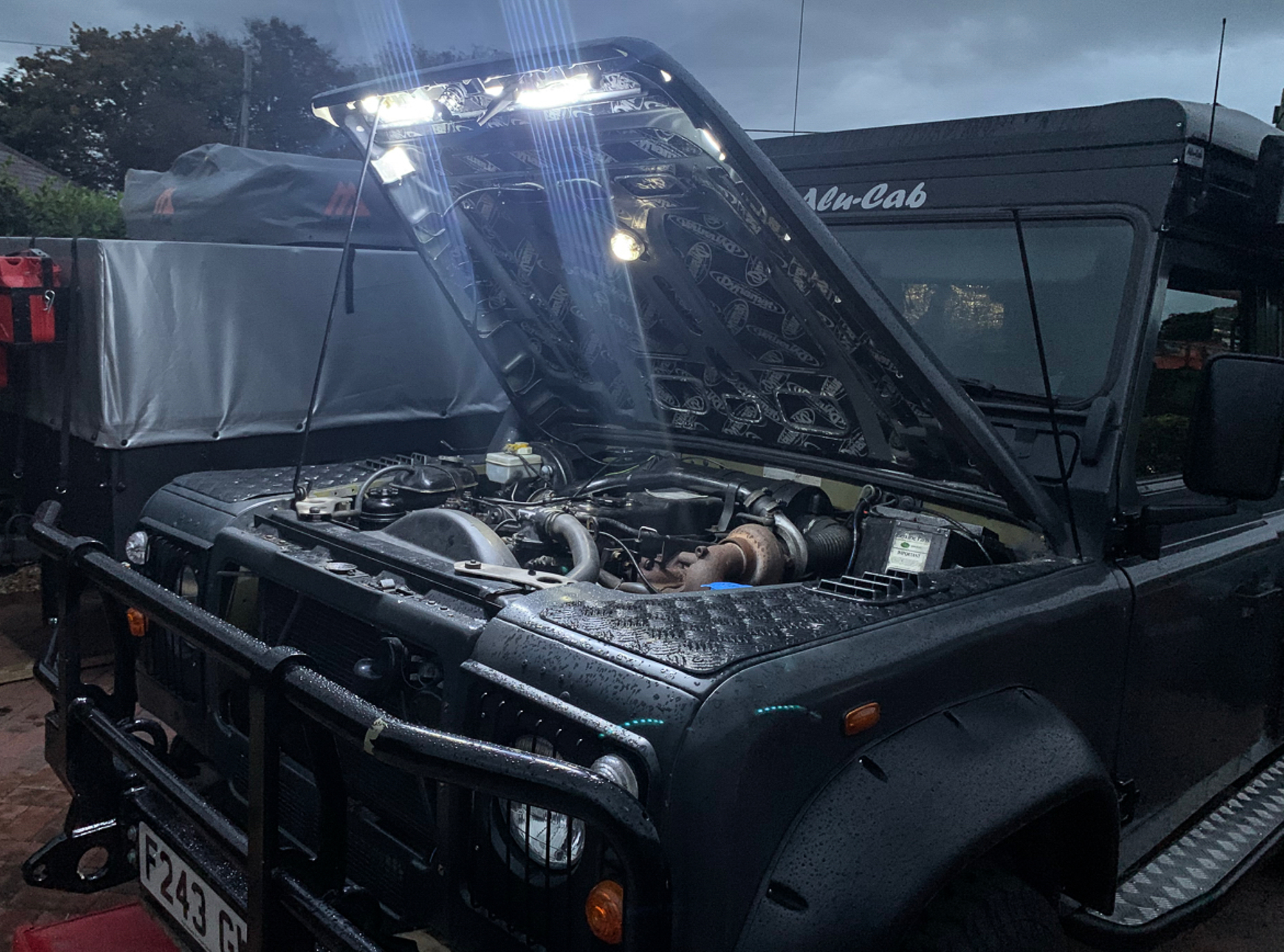
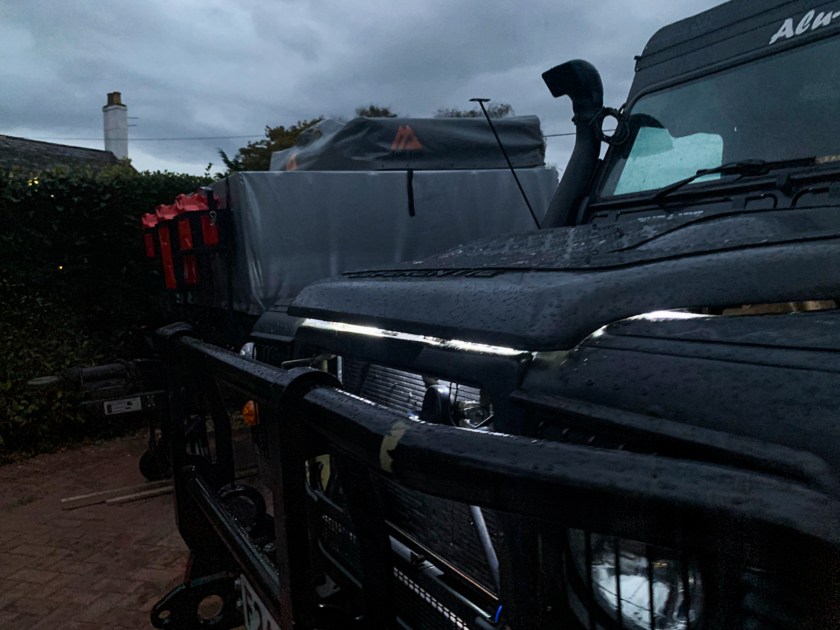
There is not much clearance under the bonnet with the Isuzu Engine, even with the later ‘puma” bonnet – with the bulge. So a bit of puzzling was needed as regards placement. I remembered that I can been given some LED strip light when I bought the Alu-Cab shadow awning, so I decided to press this into service and save a pound (For once).

I could run the wire though the cut outs in the bonnet and then thread the LED strip up the left hand side on the bonnet, along the front and down the right hand side – it looks OK. Then, thinking that the LED strip might not last that along in the harsh environment under the bonnet, I decided to add in one of the LED side lights that I had removed from the car previously, in a central position for a back up! (another pound saved)

Making use of an old side-light.


I managed to get both wires into a Deutche Plug to give me a robust and waterproof connection to the feed.

Previously the bonnet had been cut about to clear the brake master cylinder and coolant reservoir, so plenty of edging was fitted to prevent chaffing.


So all done…………….

Looks good in the dark and there is enough light, to see what is going on.

With the bonnet shut and the light on, Perentie looks like its been to Halfords – maybe I should have gotten a blue light……

Boy Racer, just needs lights underneath?

The CB Aerial

I fitted a CB Radio ages ago, when I was running wires to the shelf above the windscreen.

I mentioned this in the Camera Post, but it is impossible to run wires with connectors from the top shelf around and along the side of the vehicle so they cannot be seen, as there is insufficient space to fit the connectors through where the Alu Cab roof meets the car.

So, for the camera, I routed the cables around the outside of the shelf and drilled through the cover panel, so it was hidden for most of its run.

Initially for the CB Aerial, I cut the cable so I could run the wire hidden and then joined it using a standard co-axial connector. However, the supplied wire has thin stranded cable in the centre so it is difficult to get a good connection into the centre of the co-axial connector; the same situation when you join it to the back of the aerial bracket.

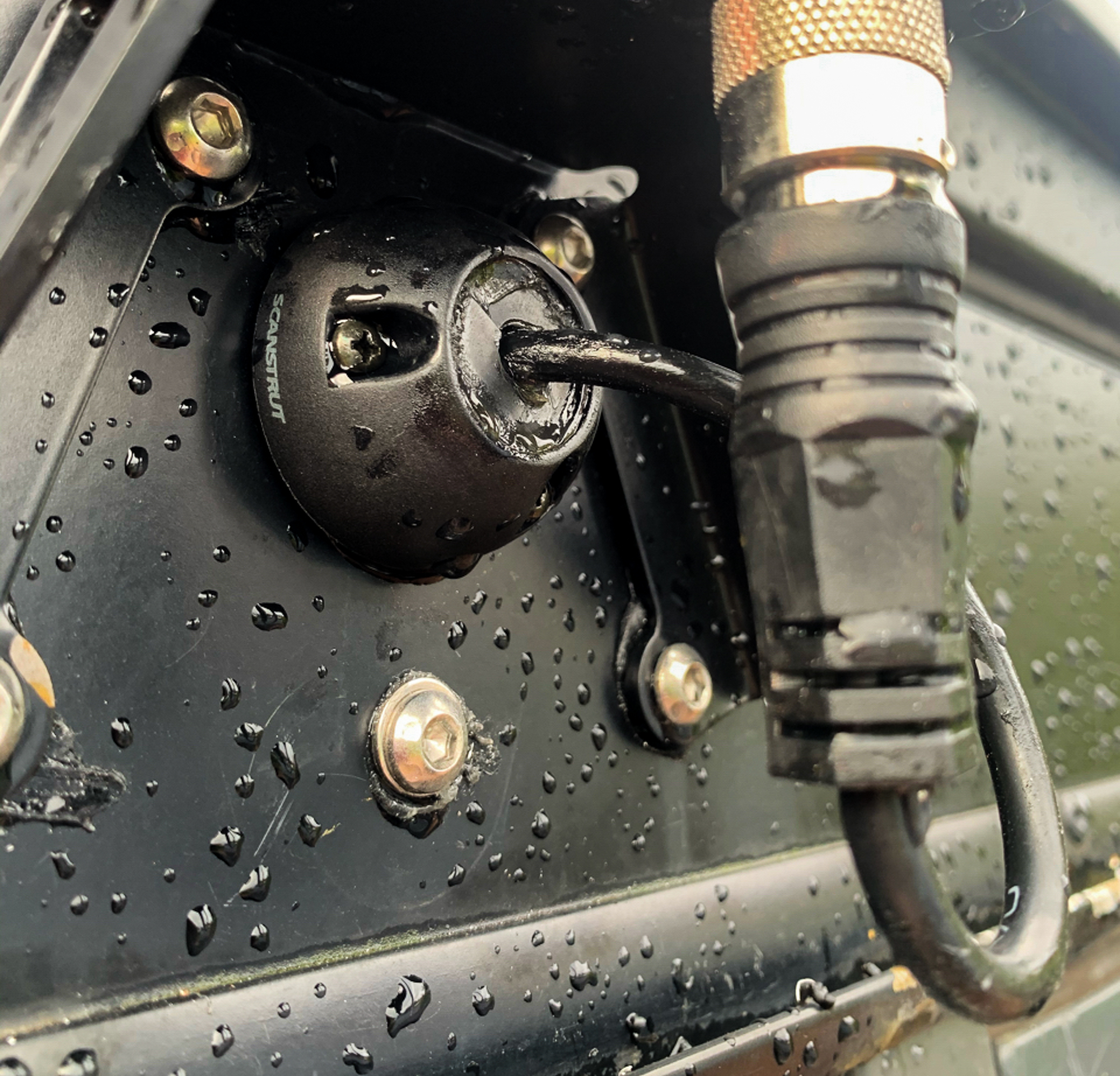
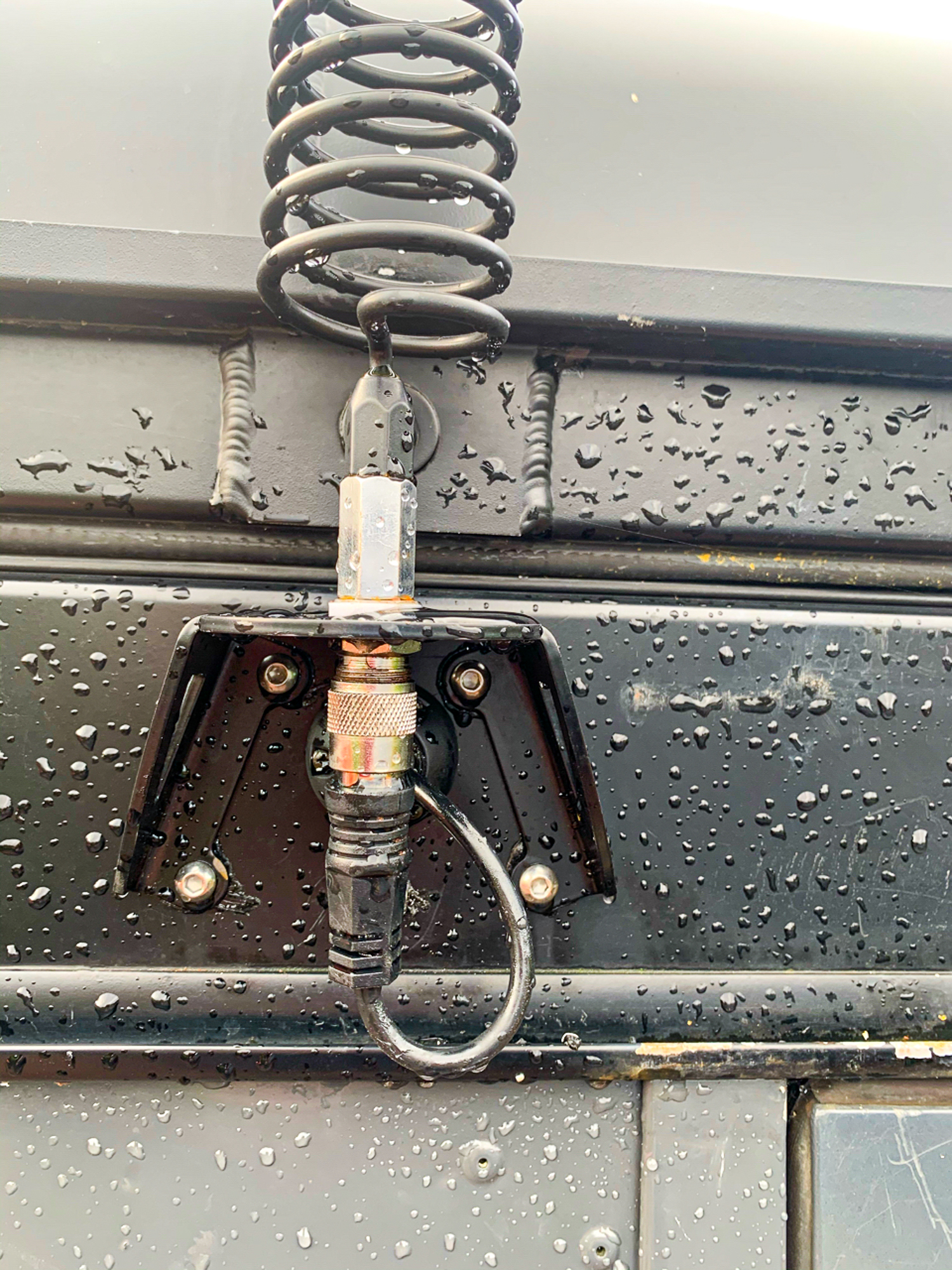
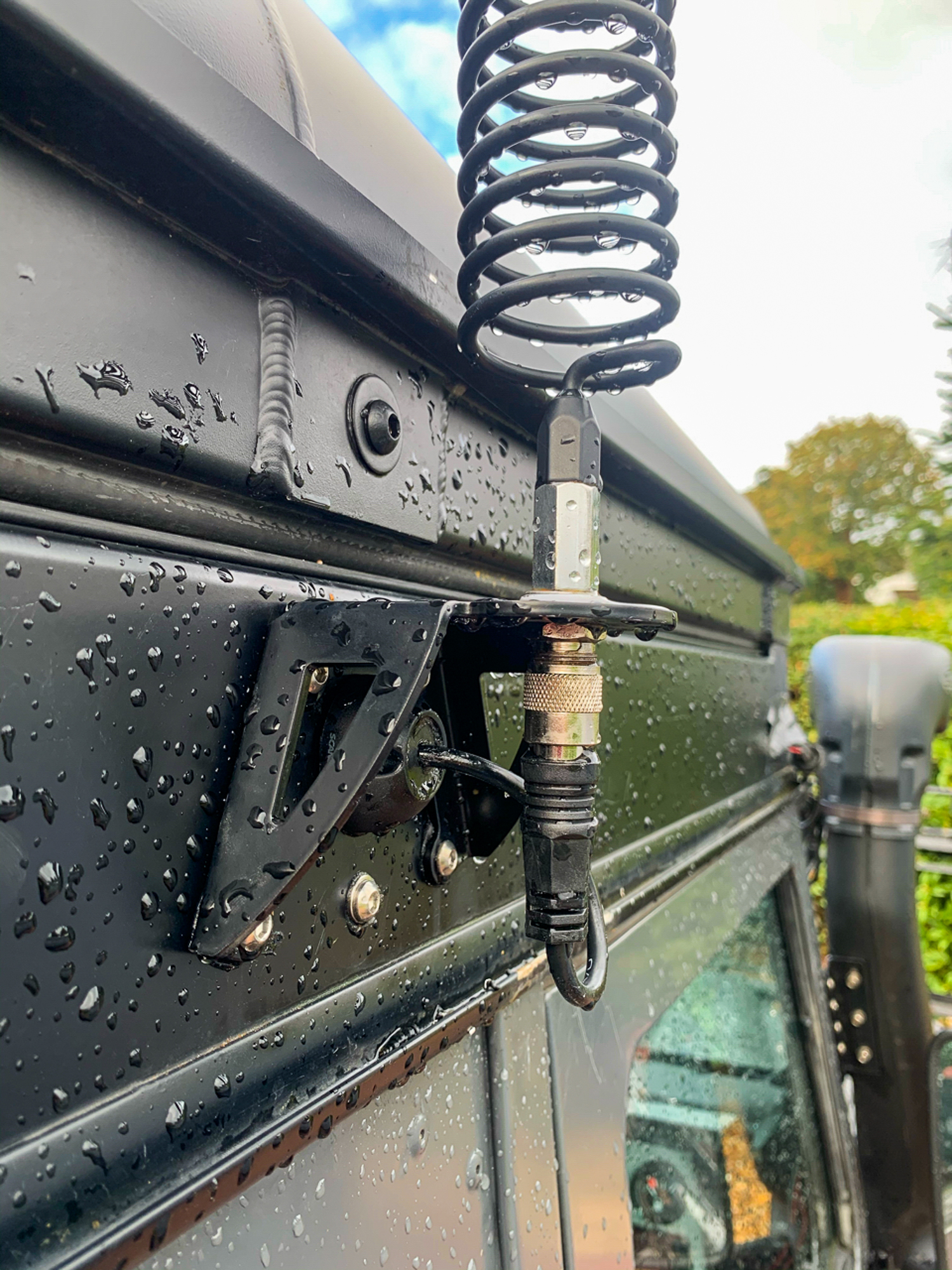
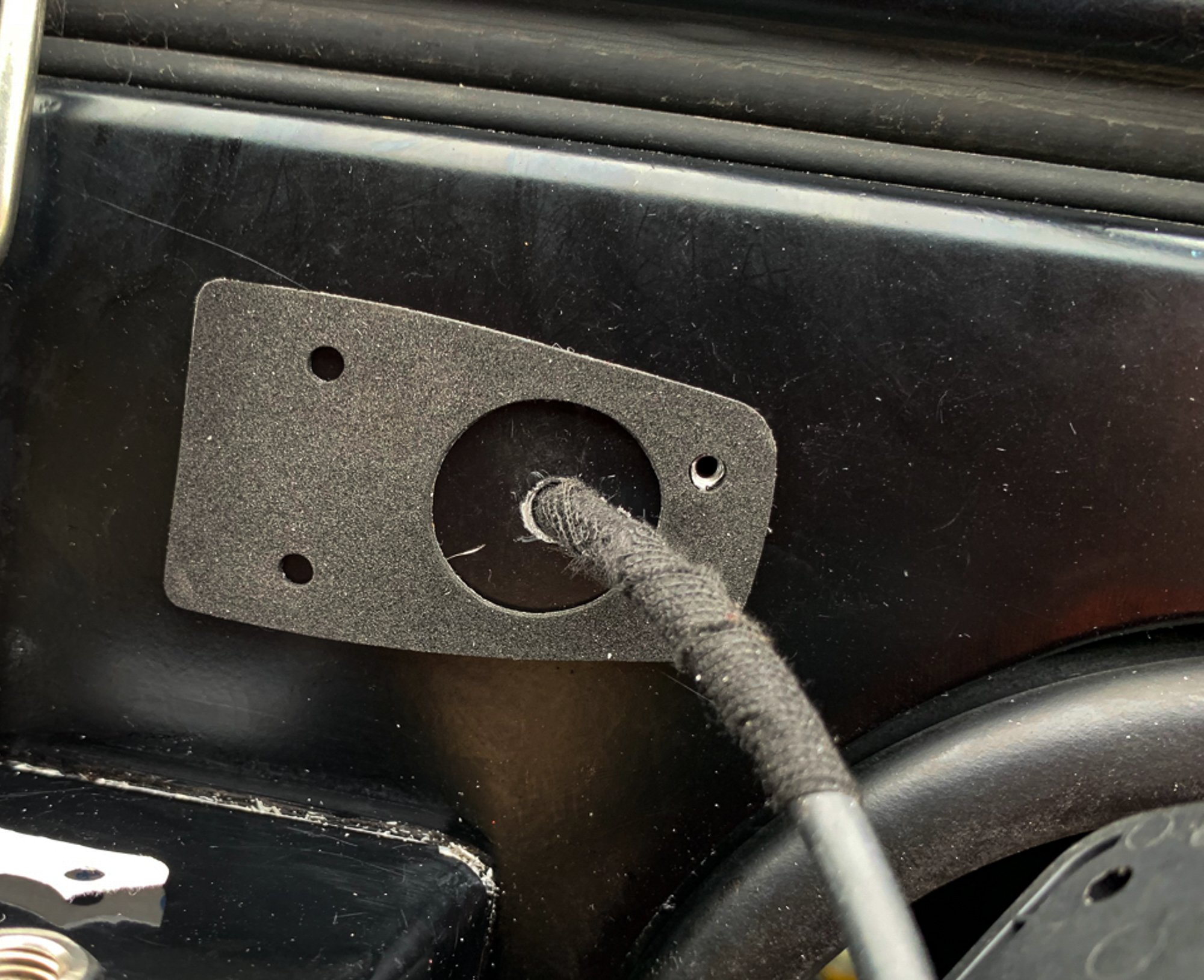
Learning from the camera installation, I decided to re-do the CB aerial connection and bought a new cable that would run from the radio around the outside of the shelf, and through side of the vehicle and plug directly into different type of aerial mount – no joins so hopefully a better ground plane. The Scan Strut Seal mentioned in the “Rear Light” post would enable me pass the rather chunky PL259 plug through the side of the vehicle and still keep it waterproof.

Running the aerial cable through the side panel

I decided to use a Thuderpole PL Stud Mount, that would fit my Mill Spec Bracket and enable the direct connection of the PL259 plug which was factory connected to the cable from the radio.

I drilled out the existing hole in the side of the car so that the PL259 plug would fit through and mounted the Mill Spec Bracket – all very neat. All I need to do now is pass the cable through the hole and the Scan Strut Seal and we are done…………

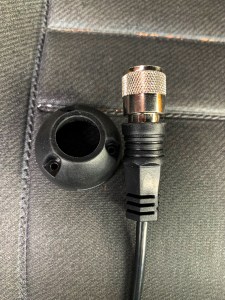
Aerial connector and scan seal

Not so…….although I had checked that the PL259 plug would fit through my hole in the bodywork, I had not checked that it would fit through the Scan Strut Seal: it didn’t! Lucky for me it was probably only 1mm diameter out; so I was able to carefully extend the diameter of the Scan Strut Seal, hopefully without compromising the waterproofing.

Drilling out the scan seal – very carefully!


Given I had plenty of spare internal seals for the Scan Strut, I installed the main seal with a good dose of Sikaflex to make sure it was waterproof – I then added another seal from the inside – then screwed it all down………..should be fine!

The Seal Scans do come in a couple of sizes, but I had already drilled the body work and mounted the bracket and I did not want a load more holes for the larger size

I also bought an SWR meter to check the power coming back through the aerial. It was pretty good coming in at a level of 2 which is acceptable. I had scraped the paint off of the bracket to ensure a good earth (ground plane). I added a further wire from the bracket to a chassis earth to see if would improve things, but it made no noticeable difference.

We will see how it works in practice, but I am sure that it will be OK.

Oh and I need to choose my handle; Benita is “Babooshka” as used by her many years ago. Me, no idea yet – answers on a post-card……..

Rear Work Lights.

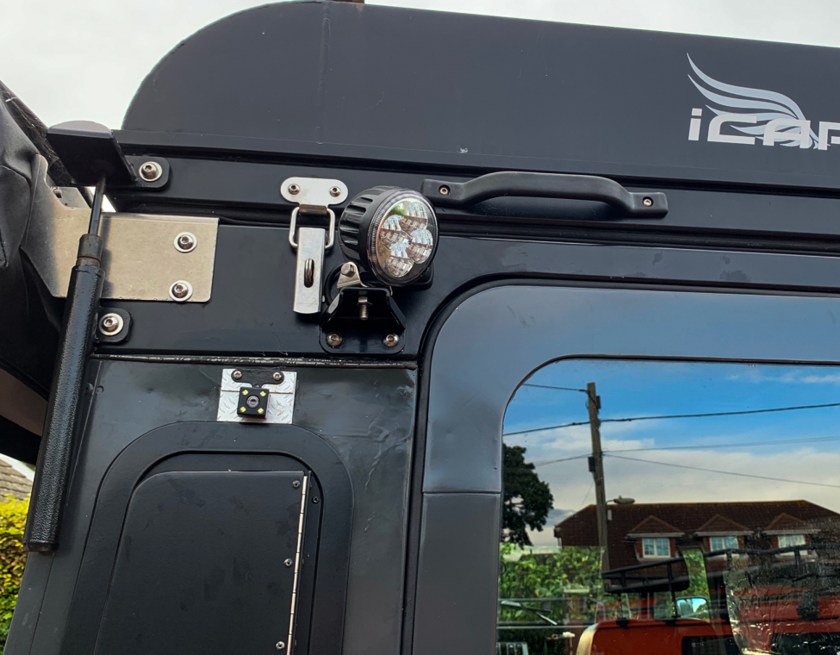
Whilst the Perentie has lights on both sides of the vehicle (Scene Lights) and on the front, I wanted to fit one to the rear. This would help reversing and give us more light when camping.

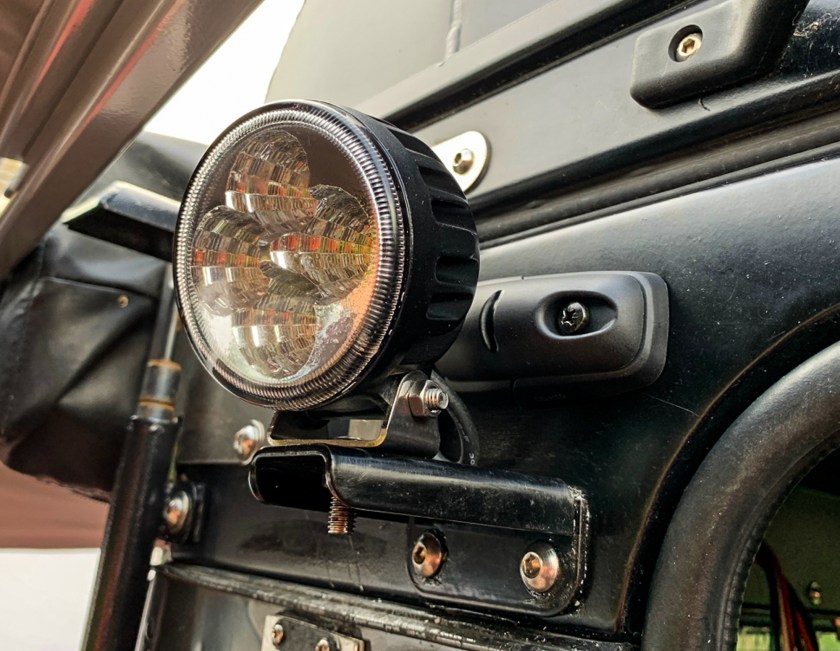
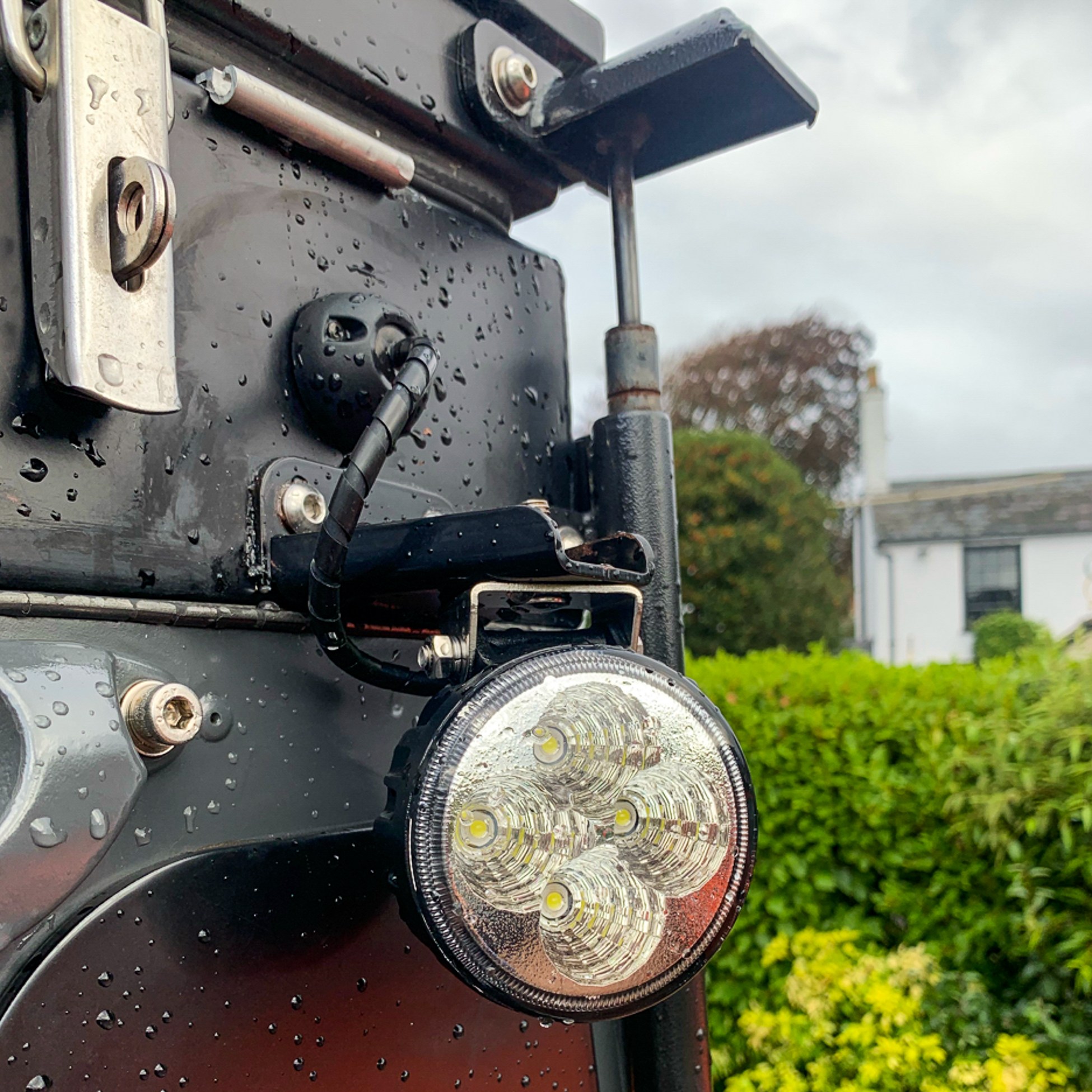
I got an LED work light from Car Builder Solutions ages ago and a lovely aluminium bracket from Mill Spec in Holland. I did postpone fitting it when I decided to get the Alu Cab awning as I thought it might get in the way of the fixing brackets – I was right! So I got a standard aluminium bracket from e-bay – not cheap but nice quality.

I could just fit this bracket with room behind to bolt it up and without fouling the locks for the pop up roof. Stainless Steel fixings as usual and a good dollop of sikaflex to stop leaks!

Light bracket with a bit of swarf still present!

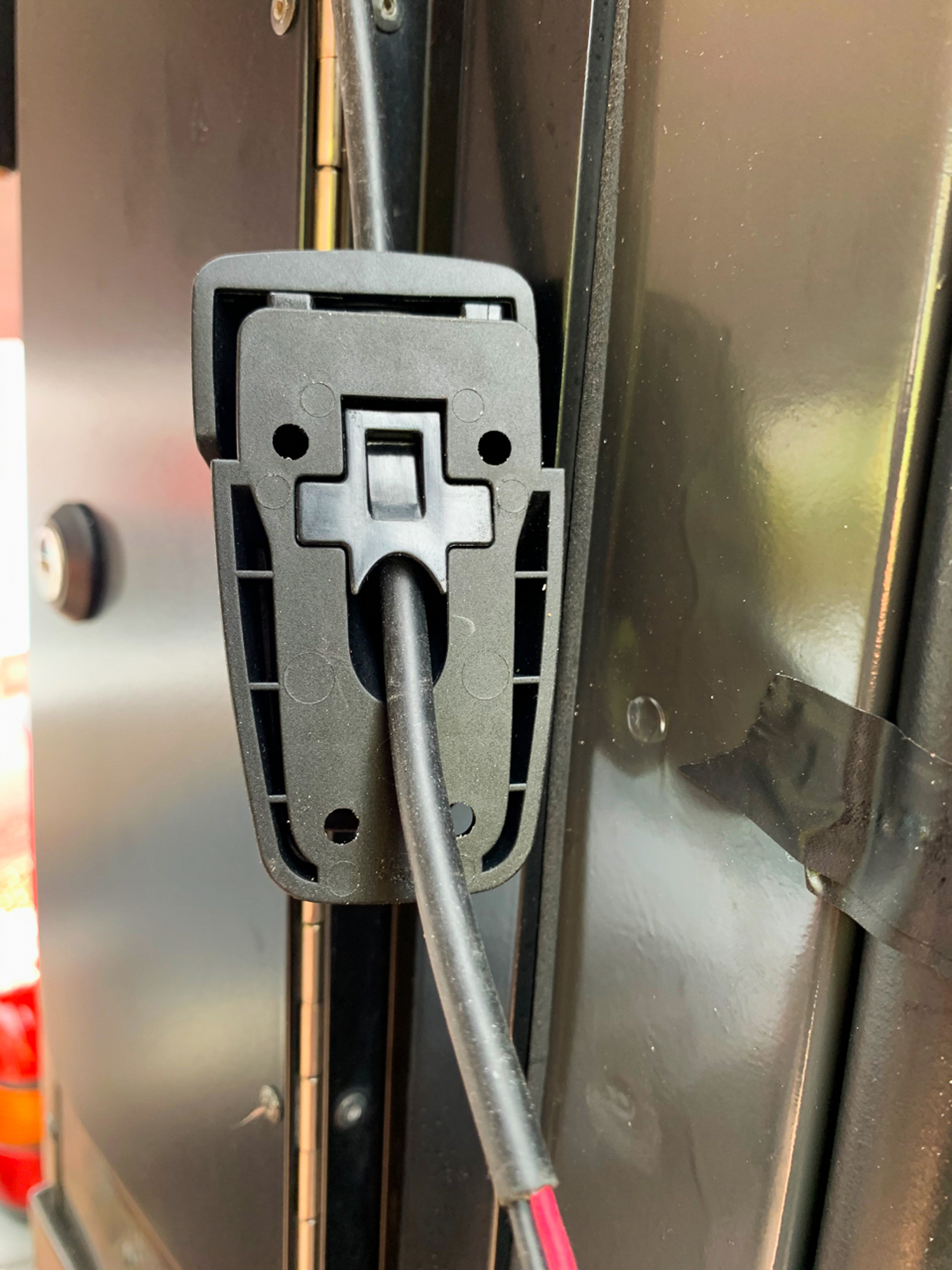
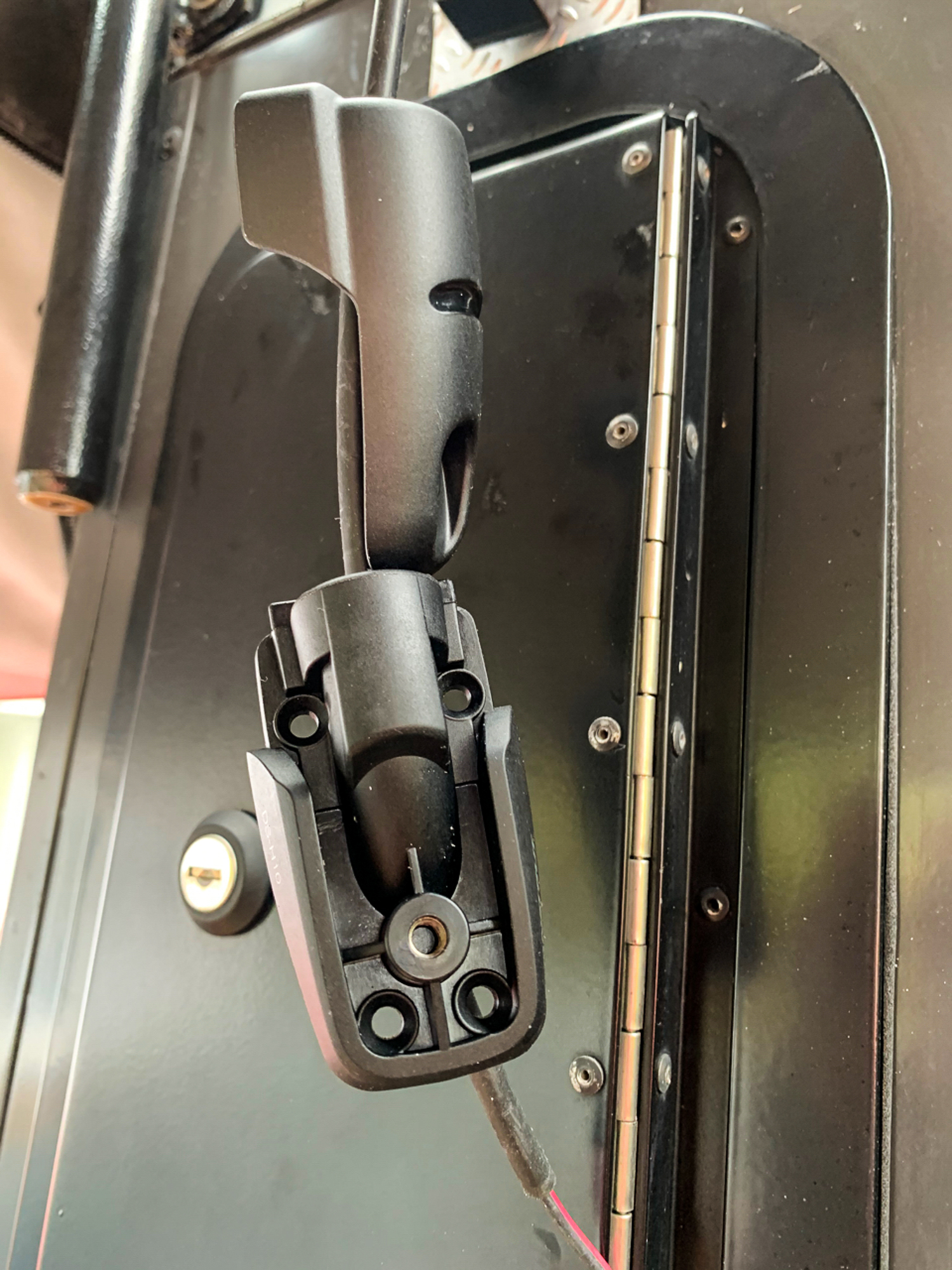
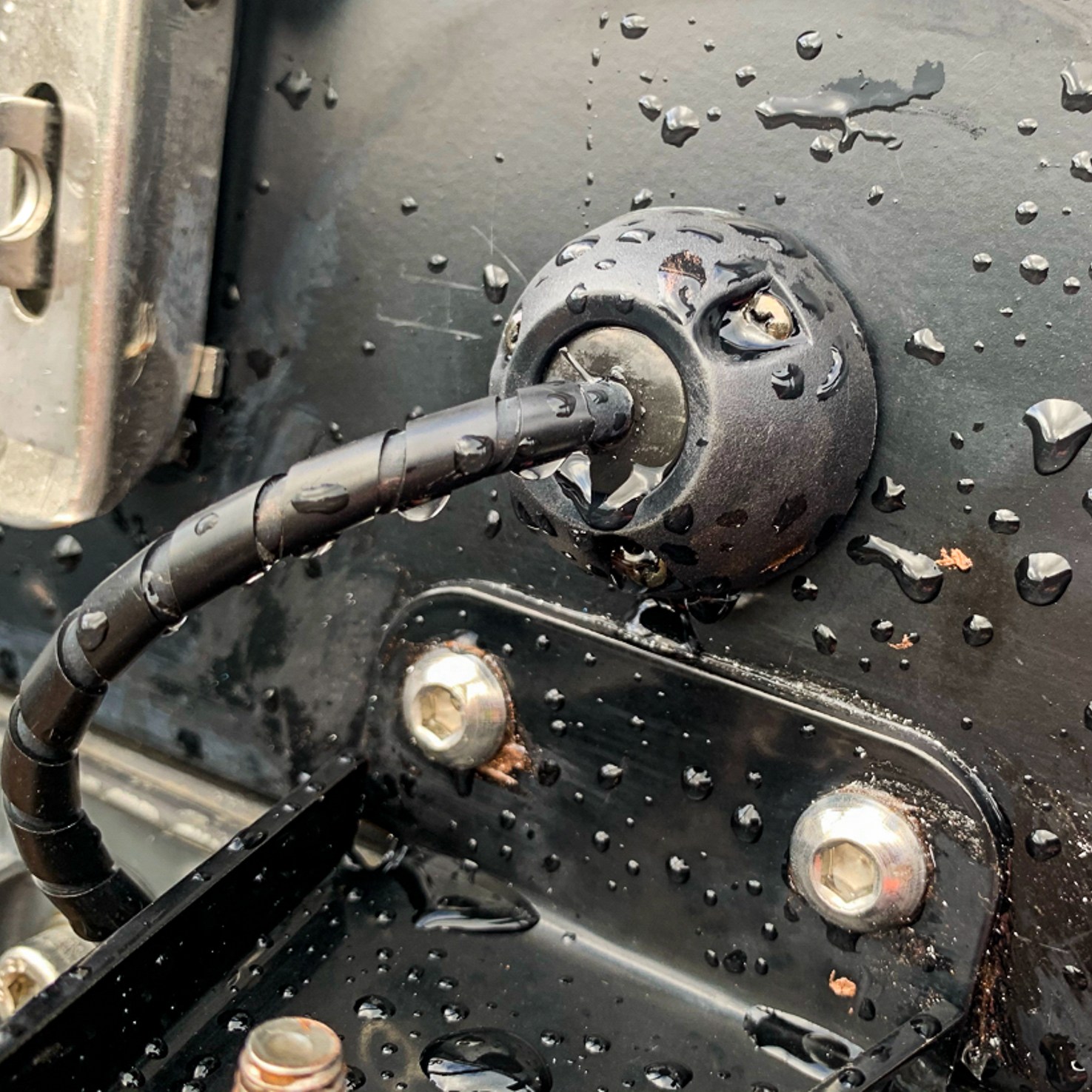
Talking of leaks I needed to get the cable through into the vehicle without the water, so I got a scan strut cable seal (DS-H6) from Mud Stuff, which promised not to let let water in!

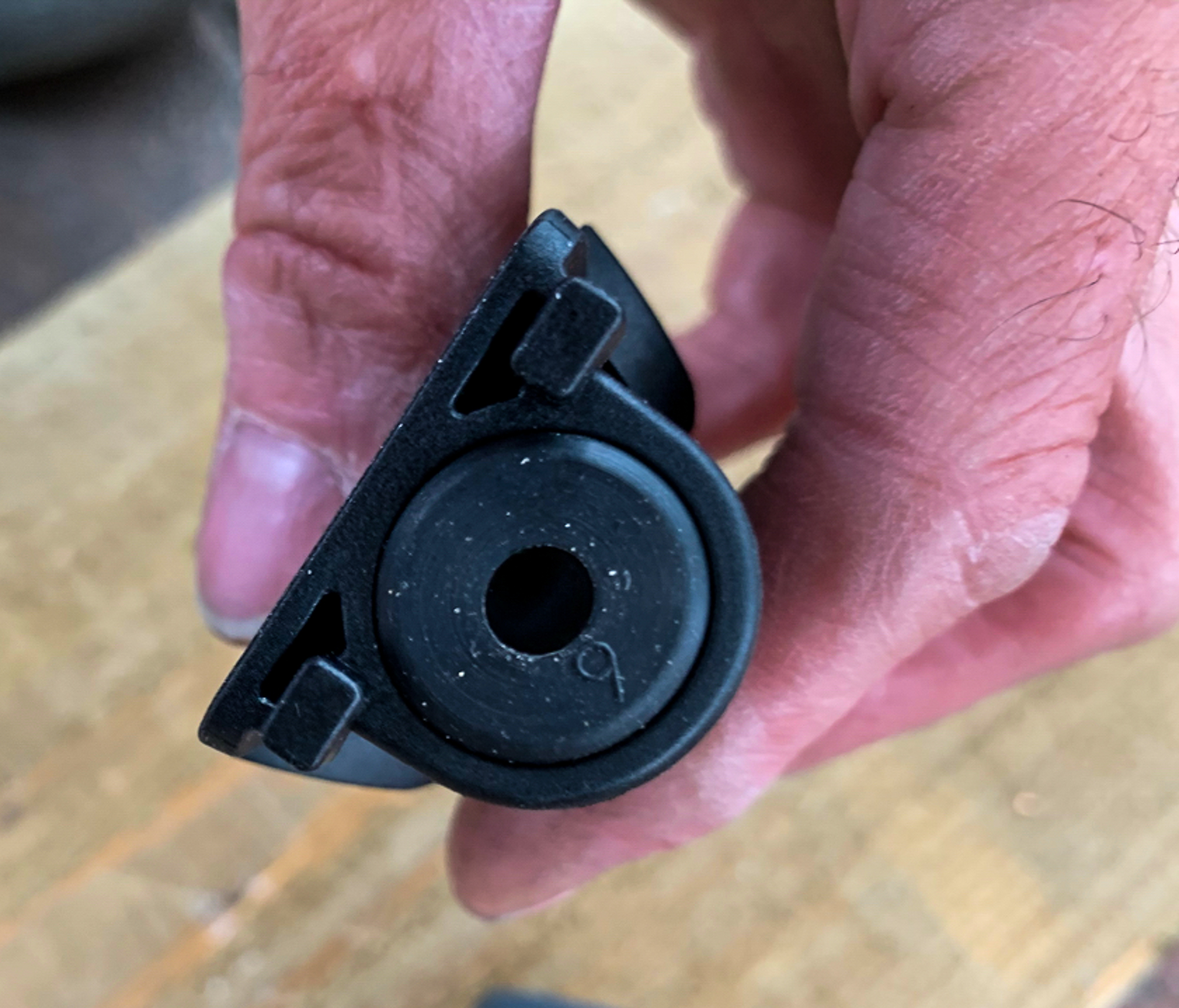
This was, in reality a bit of a pain to fit. It has a back plate that needs to be attached to the vehicle; in exactly the right position. Then the cable has to be fed through the front casing which has the waterproofing grommet (select the right size for your wire), then though the back plate into the vehicle.

If you had been feeding a wire from the vehicle through to the outside this would have been easier. But because the cable was attached to the lamp, it had to be fed from the outside in……….through the outside casing, through the back plate into the vehicle; so you had to hold everything in the place at the same time and that was just to drill the holes in the right place for the holes to secure the back plate. If I had been an Octupus it would have been simple!

I didn’t want to oversize the hole into the vehicle to add conduit, so I made sure I filed the sides of the hole so that there were not sharp edges and added cloth insulation tape to avoid chaffing. A good dose of sikaflex will make it double waterproof and I will make sure the cable does not move once fitted in finally.


The e-bay bracket was good, so I have ordered another, so I can fit a light to the other side of the back door. One of these I will switch from the rear of the vehicle, so handy when you are putting up the awning or last thing at night, and the other from the front, so for reversing if you are driving – clever Huh!

Passenger side, Job Done!

For the other side I used a different type of Scan Strut cable seal, (DS-16) where the cable comes directly through a hole in the panel. Easier to fit and the seals are split, so if your wire has a connector on it, the connector does not have to be removed. I will use one of these for the CB Aerial along with my nice bracket from MillSpec.

All fitted and quite straightforward. I decided to hang the light down, so the beam would not be blocked by the back door when it was open; but I can change this if needed.

One Chance to See the World

Insta @onechancetoseetheworld